Wound as Weapon: The Long American Tradition of Converting Injury Into Institutional Power

Photo by Photo by Library of Congress on Unsplash on Unsplash
There is a ledger that no economist tracks and no auditor reviews, but it has governed American institutional life for at least a century and a half. It records not assets and liabilities in the conventional sense, but something more durable: grievances catalogued, preserved, and eventually monetized. The entry on the left side of the ledger is always some genuine injury. The entry on the right is always power — political, financial, or social — extracted from that injury long after the wound itself might otherwise have healed.
History is the longest psychology study ever conducted, and what it reveals about this pattern is uncomfortable: the conversion of victimhood into institutional currency is not a modern pathology, not a product of social media, and not unique to any single American political tradition. It is a recurring feature of human group behavior, visible across centuries, and it operates through a remarkably consistent set of psychological mechanics regardless of who is running the program.
The Lost Cause as Business Model
The most instructive early American example is also one of the most thoroughly documented. In the years following the Civil War, the Confederate defeat presented a genuine psychological crisis for the white Southern ruling class. The military loss was total. The economic model that had sustained plantation society was legally abolished. The narrative of Southern civilization as a noble and superior order had been repudiated by force.
What emerged in response was not acceptance but architecture. The Lost Cause — the systematic reframing of Confederate defeat as tragic martyrdom rather than moral failure — was not simply a cultural sentiment. It was an institutional project with organizational infrastructure, publishing operations, monument commissions, and fundraising machinery. The United Daughters of the Confederacy, founded in 1894, operated as a sophisticated advocacy organization that placed Confederate monuments in courthouse squares, lobbied for textbook revisions, and built a physical landscape of commemorative grief that persisted for more than a century.
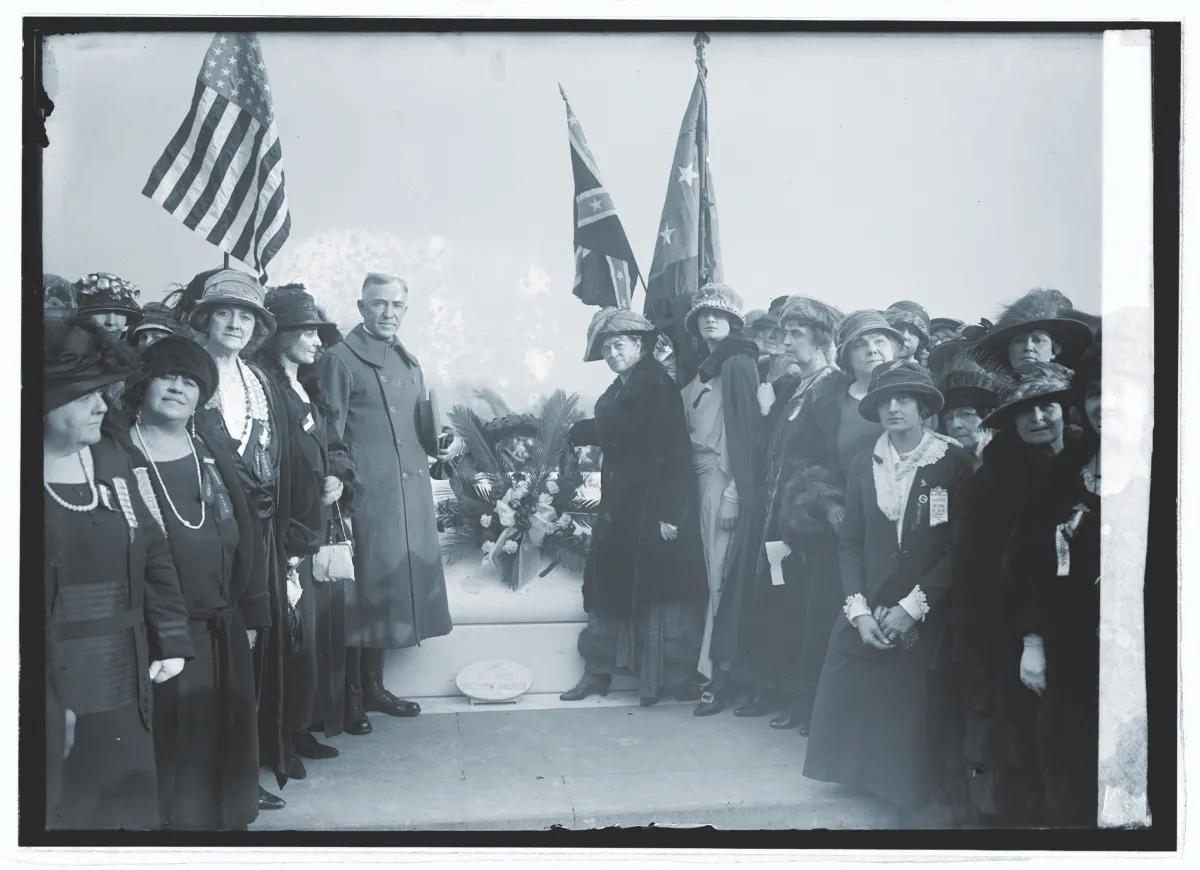 Photo: United Daughters of the Confederacy, via www.historynet.com
The business logic was sound. A defeated cause offered something a victorious one could not: the emotional charge of injustice. Donors gave to preserve a wound. Members joined to tend it. Politicians courted the constituency it produced. The injury, carefully maintained rather than allowed to close, became more institutionally valuable than any outcome a Confederate victory might have generated.
The Labor Movement and the Sanctification of Martyrs
The labor movement of the late nineteenth and early twentieth centuries operated from genuine injury of a different kind. Industrial working conditions were dangerous, hours were brutal, and legal protections were essentially nonexistent. The grievances were real, documented in accident reports and mortality statistics that read as indictments of an entire economic order.
What is instructive for the purposes of this analysis is not the legitimacy of those grievances but the institutional use to which they were put. The martyrdom of labor — the Triangle Shirtwaist Factory fire of 1911, the Ludlow Massacre of 1914, the Haymarket affair of 1886 — was not merely mourned. It was preserved, ritualized, and deployed as organizational fuel. Labor Day itself began partly as a commemoration of sacrifice. The dead were transformed into permanent institutional assets.
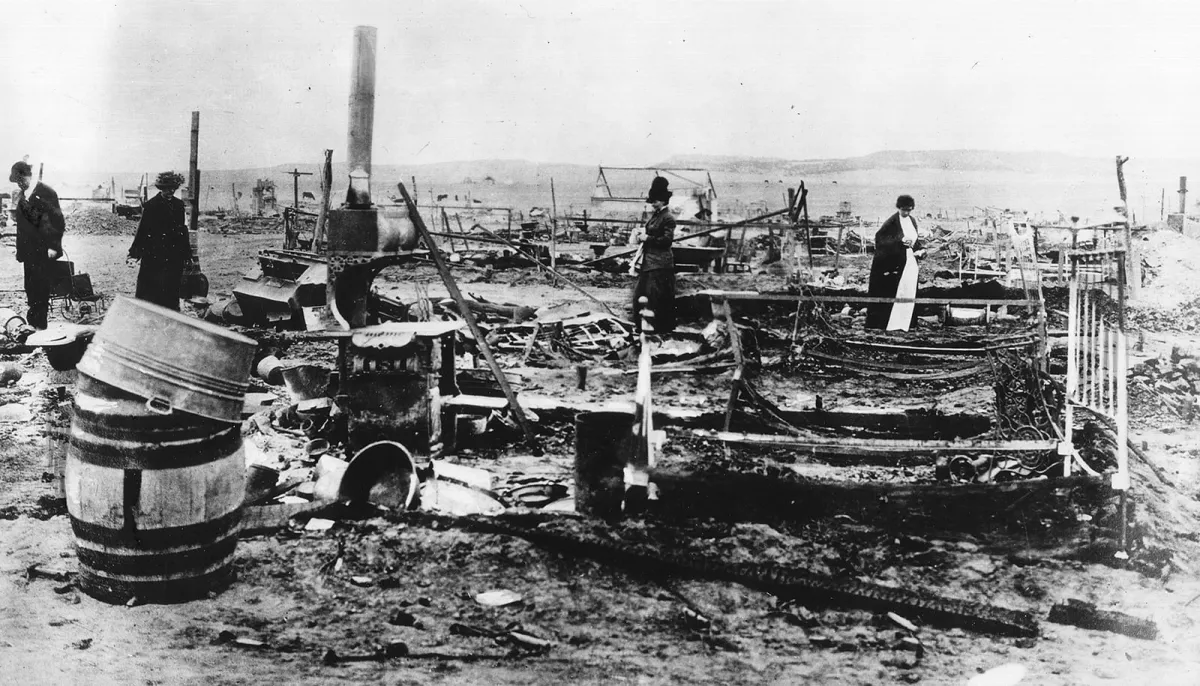 Photo: Ludlow Massacre, via www.uncovercolorado.com
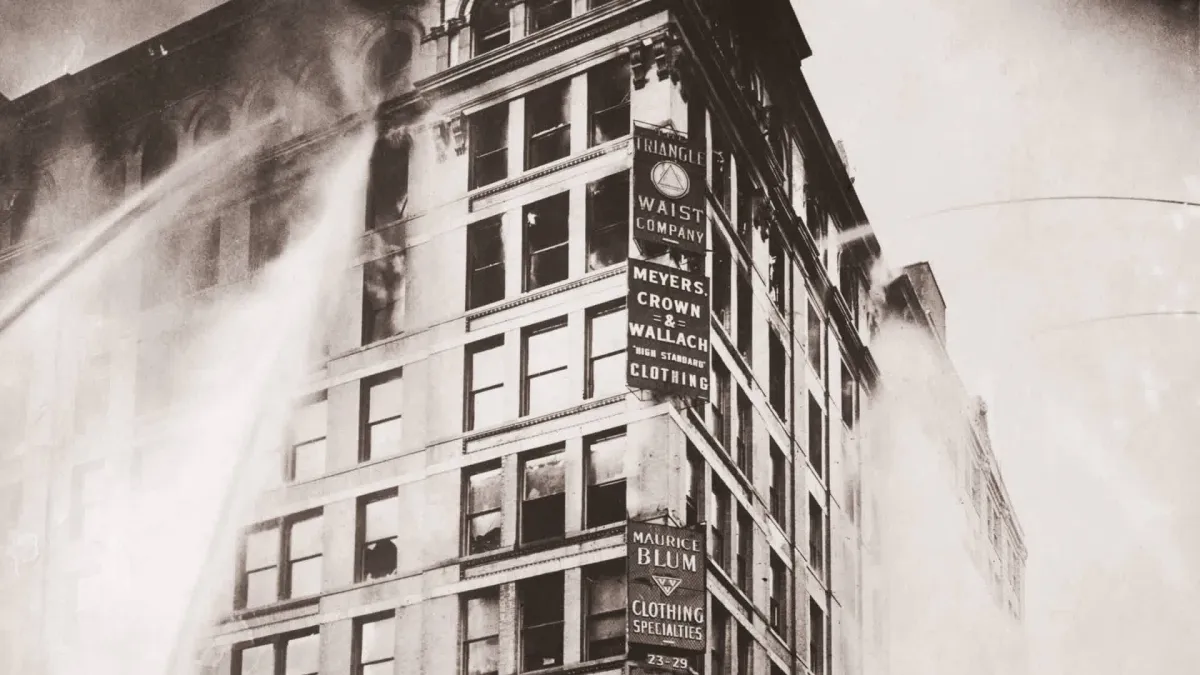 Photo: Triangle Shirtwaist Factory fire, via res.cloudinary.com
This was not cynicism on the part of labor organizers; in many cases it was sincere. But the psychological effect was identical to what the Lost Cause architects had discovered: a movement organized around a wound attracts loyalty that a movement organized around a policy platform cannot reliably sustain. People will fight for the dead in ways they will not fight for a regulatory proposal.
The Consistent Psychology
What the historical record reveals, across these and many other American examples, is a set of psychological mechanics that operate with remarkable consistency.
First, genuine injury is the necessary raw material. Manufactured grievance exists and has its own history, but the most durable institutional grievance economies are built on something real. The injury does not need to be ongoing; it needs only to have occurred and to be capable of being remembered.
Second, the wound must be given an institutional custodian. A grievance without an organization to maintain it dissipates. The psychological energy of collective injury is volatile and requires containment — a membership organization, a publication, a monument commission, a political party caucus. The custodian's institutional survival becomes linked to the wound's preservation.
Third, and most critically, the wound must be made to feel perpetually unresolved. A healed injury produces gratitude, not mobilization. The institutional grievance economy requires that no settlement, no apology, no policy change, and no passage of time be permitted to close the account. Each potential resolution must be reframed as insufficient, as a new betrayal, or as evidence that the original injury runs deeper than previously understood.
What the Ledger Actually Reveals
The question this history raises is not whether any particular grievance is legitimate. Many are. The question is what it reveals about human motivation when the wound becomes structurally more valuable than the cure.
The answer the historical record offers is not flattering but is genuinely useful. Human beings are more reliably mobilized by perceived loss than by anticipated gain — a finding that behavioral economists now treat as a discovery but that every successful American political organizer of the past 150 years understood intuitively. The technical term is loss aversion. The historical term is simply politics.
What changes across eras is not the psychology but the sophistication of the delivery mechanism. The United Daughters of the Confederacy used monument dedications and school curricula. The labor movement used parades and memorial publications. Contemporary political operations use direct mail, digital fundraising, and algorithmic content amplification. The emotional product being sold is identical in each case: the feeling that one belongs to an injured people whose injury demands a response, and that the organization asking for your support is the proper vehicle for that response.
The Old Ledger does not editorialize about which grievances deserve institutional expression and which do not. That is a political question, not a historical one. What history does editorialize, clearly and repeatedly, is this: when an institution's financial model depends on a wound remaining open, the institution will resist any force — including the very remedies its members believe they want — that threatens to close it. This is not a modern political observation. It is an old accounting principle. Organizations optimize for their own survival. And in the grievance economy, survival requires an inexhaustible supply of injury.
The ledger stays open because closing it would put the bookkeeper out of business.