Against All Reasonable Forecasts: The Communities That Refused the Economists' Verdict

Photo by Photo by J Dean on Unsplash on Unsplash
Against All Reasonable Forecasts: The Communities That Refused the Economists' Verdict
The economists are usually right. When the mine closes, the workers leave. When the mill shuts, the storefronts empty. When the railroad reroutes, the town it bypasses begins a long, quiet contraction that ends either in abandonment or in the kind of diminished equilibrium that regional planners politely call a "rural community" and privately call a lost cause. The market logic is sound, the historical precedent is substantial, and the forecast is generally accurate.
Generally, but not always. History — which is, after all, the longest and most comprehensive record of human behavior ever assembled — contains a persistent and instructive minority of exceptions: communities that absorbed an economic extinction event and rebuilt themselves through mechanisms that no spreadsheet predicted and no rational-actor model anticipated. These places did not survive because they had advantages the economists missed. They survived because their residents did something that economic models treat as a cognitive error — they refused to leave a place that no longer made financial sense to stay in.
What looks like irrational attachment to a dying geography is, the historical record suggests, something considerably more sophisticated: one of the oldest collective survival algorithms in the human repertoire.
Lowell, Massachusetts: The Mill Town That Reinvented Its Own Ruins
Lowell was built as a planned industrial city in the 1820s, designed from the ground up to house the textile mills that would make it, for a time, the most productive manufacturing center in the young republic. By the mid-twentieth century, the mills were gone — relocated south and eventually offshore — and Lowell had entered the long decline that economic theory predicted.
What economic theory did not predict was that the ruins themselves would become the industry. Through a combination of local advocacy, political pressure from a congressional delegation that included a future Speaker of the House, and a genuinely creative reframing of industrial heritage as cultural asset, Lowell secured designation as a National Historical Park in 1978. The mill buildings that represented industrial failure were reclassified as irreplaceable historical infrastructure. Tourism, education, and eventually technology-sector recruitment followed.
The psychological mechanism at work was not optimism in any conventional sense. It was the conversion of sunk costs — the emotional investment in a place, its history, its identity — from an economic liability into a negotiating asset. Lowell's residents and advocates did not argue that the mills would return. They argued that the fact of the mills' having been there made Lowell worth preserving. The wound became the attraction.
Mineral Point, Wisconsin: Craft, Stubbornness, and the Refusal to Rationalize
Mineral Point was a lead-mining boomtown in the 1830s, settled heavily by Cornish miners who brought their craft traditions and their architectural preferences with them from England. When lead mining declined and zinc mining eventually followed it into obsolescence, Mineral Point had no obvious replacement industry and a population that could have dispersed to Milwaukee or Chicago with relative ease.
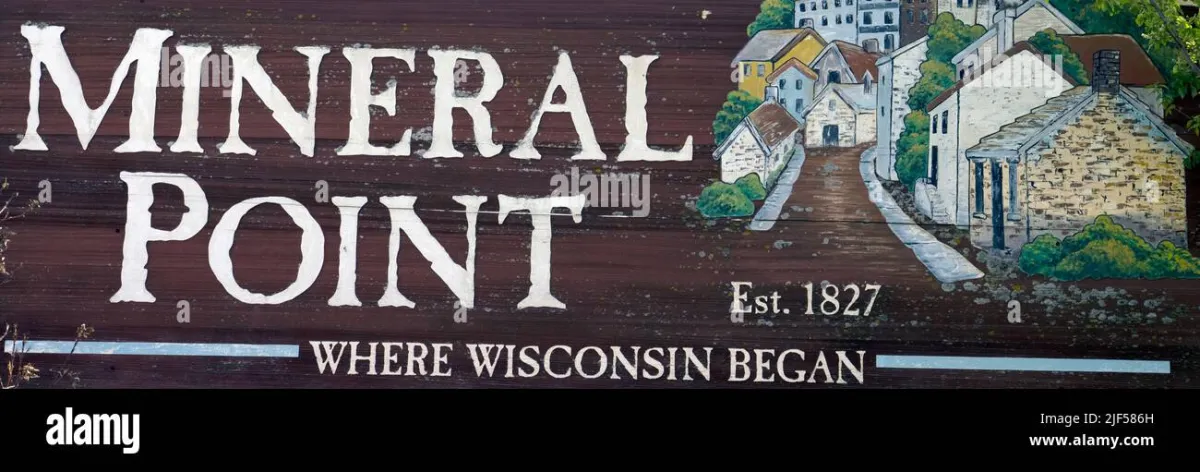 Photo: Mineral Point, Wisconsin, via c8.alamy.com
What kept it alive, and eventually transformed it into a destination, was the stubborn persistence of craft identity. Cornish building traditions had produced a distinctive built environment — limestone cottages, a particular streetscape — that residents maintained not because it was economically rational but because it was theirs. Artists began arriving in the 1930s, attracted by cheap real estate and authentic character. The community's resistance to modernization, which had looked like provincialism, turned out to be the preservation of a genuinely scarce asset.
The historical lesson here is specific: communities that maintain cultural distinctiveness through periods of economic stress often find that distinctiveness becomes economically valuable once the broader market develops an appetite for authenticity. The stubbornness that looks like failure to adapt is sometimes the preservation of the only thing that will eventually attract the adaptation's funding.
Johnstown, Pennsylvania: Catastrophe as Repeated Identity
Johnstown's case is more complicated and, in some respects, more psychologically revealing. The city survived the catastrophic flood of 1889 — one of the deadliest disasters in American history — and rebuilt. It then survived the decline of the steel industry that had been its economic foundation for most of the twentieth century, though with considerably more difficulty and considerably less complete success.
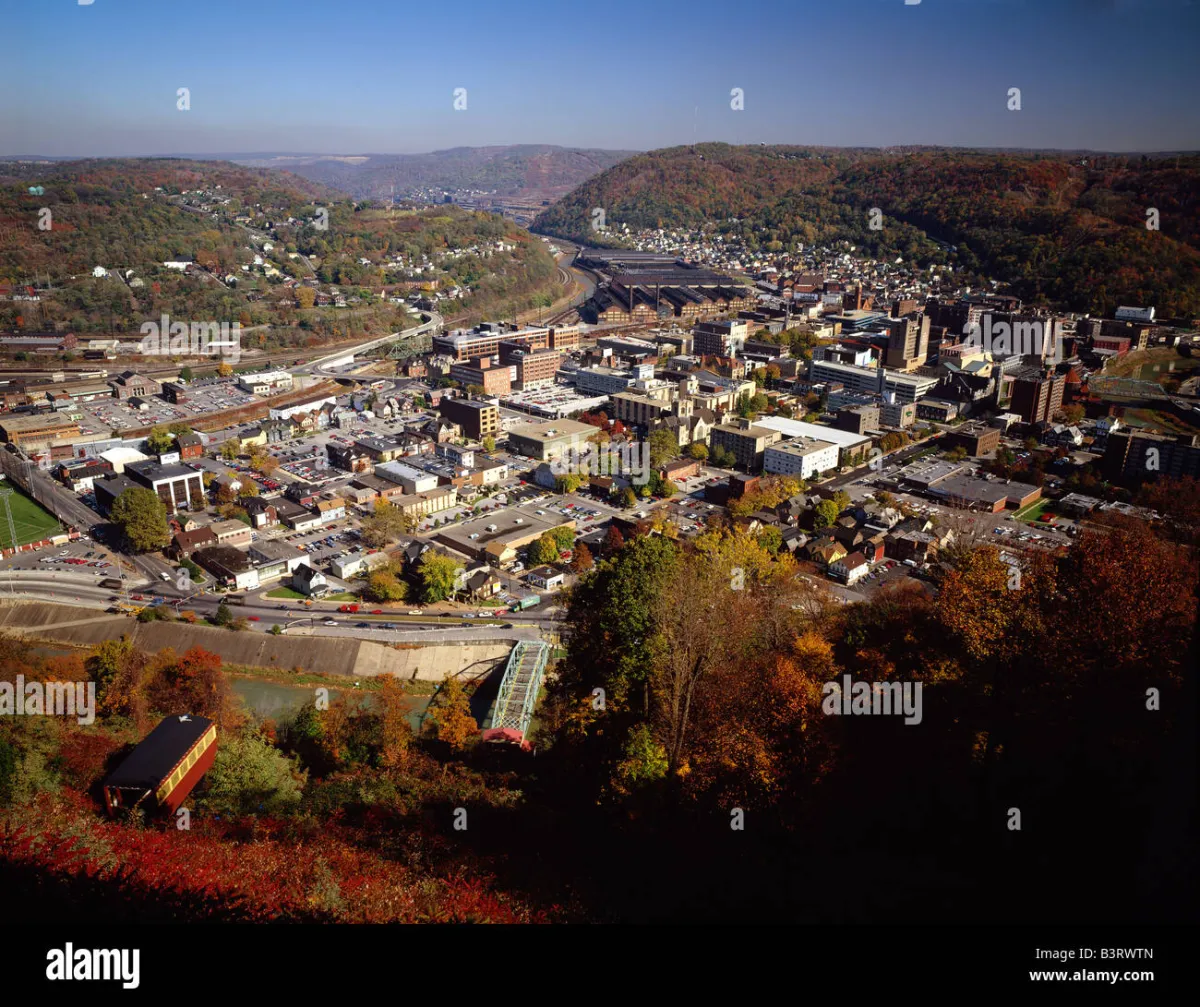 Photo: Johnstown, Pennsylvania, via c8.alamy.com
What Johnstown demonstrates is the double-edged nature of disaster identity. The 1889 flood gave the city a narrative of resilience that became genuinely constitutive of local self-understanding. Residents referenced it explicitly when confronting later economic challenges. The psychological inheritance of having survived something unsurvivable created a community prior that made abandonment feel like a betrayal of the dead.
This is a mechanism that appears repeatedly in communities that survive economic extinction: the weight of those who came before — who built, who suffered, who stayed — functions as a form of social obligation that rational economic calculation cannot easily override. It is not a financial argument. It is a moral one, and in human psychology, moral arguments frequently defeat financial ones.
The Recurring Pattern
Across these cases and others like them — the coal towns of Appalachia that found niches in outdoor recreation, the rust-belt cities that converted industrial infrastructure into arts districts, the agricultural communities that pivoted to agritourism — a consistent set of psychological patterns emerges.
First, survival almost always requires a reframing of the past rather than a rejection of it. Communities that successfully rebuild do not typically abandon their industrial or agricultural identities; they reclassify those identities as assets. The thing that failed becomes the thing that distinguishes.
Second, the critical period is not the economic collapse itself but the five to fifteen years following it, when the population that remains is self-selected for attachment rather than mobility. The people who stay are, by definition, the people for whom the place outweighs the opportunity cost of leaving. This creates a concentrated pool of motivated actors that no economic model generates naturally, because economic models assume rational mobility.
Third, external recognition — a historical designation, a media profile, an arts organization's decision to locate there — functions as a permission structure for residents who want to invest but need confirmation that their instinct is not simply irrational sentiment. The external validator converts private stubbornness into legitimate civic strategy.
What the Ledger Counts
The market is not wrong about most dying towns. Most of them die. But the historical exceptions reveal something important about the limits of economic forecasting when applied to human communities: the models assume that people optimize for financial outcomes, and people frequently do not.
What they optimize for, the historical record suggests, is meaning — and meaning is often tied to place in ways that are not reducible to property values or employment statistics. The communities that survive economic extinction are not the ones that find a rational argument for staying. They are the ones that never accepted the premise that rationality was the relevant standard.
Five thousand years of recorded human behavior support one conclusion on this point: people have always been willing to absorb extraordinary material costs in defense of the places and identities they understand as their own. Economists call this irrational. History calls it a survival algorithm. The distinction matters.