Death Before Compromise: When American Pride Chose Extinction Over Submission
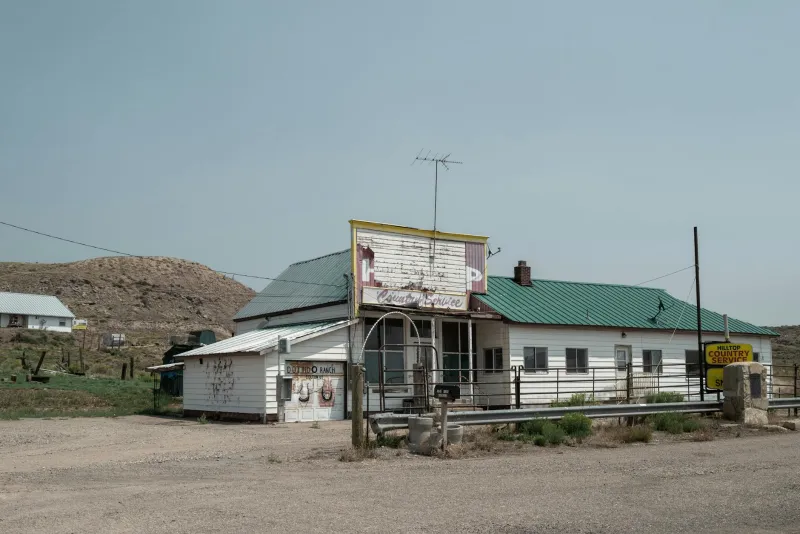
The Railroad That Never Came
Picher, Oklahoma: Mining Town's Fatal Stubbornness (1913-2009)
When the Missouri-Kansas-Texas Railroad proposed routing through Picher in 1913, the town's mining elite demanded the company pay premium rates for right-of-way access. The railroad, facing similar demands from dozens of other mining towns, simply chose an alternate route fifteen miles south. Picher's leaders celebrated their successful negotiation—they had protected local property values and maintained their autonomy.
Ninety-six years later, Picher became the first American town evacuated by federal environmental disaster declaration. The zinc and lead mining that made railroad access seem unnecessary had poisoned the groundwater, contaminated the soil, and left chat piles of toxic waste throughout the community. The town that had been too proud to compromise with the railroad died from the very industry it had protected.
The psychological pattern was established early: Picher's residents consistently chose short-term autonomy over long-term survival. When federal environmental officials first raised concerns about lead contamination in the 1980s, the town council rejected cleanup proposals that would have required acknowledging mining companies' liability. When the EPA offered relocation assistance in 2006, many residents refused to leave, insisting the contamination was exaggerated.
Picher's death was not inevitable—it was chosen, repeatedly, by people who preferred extinction to the admission that their initial decisions had been wrong.
The Flood That Was Invited
Vanport, Oregon: The City That Refused the Levee (1942-1948)
Vanport was built in 1942 as temporary housing for shipyard workers, but by 1948 it had become Oregon's second-largest city with over 40,000 residents. When Army Corps of Engineers warned that spring flooding posed an existential threat to the low-lying community, city officials faced a choice: accept federal funding for improved flood protection that would require acknowledging Vanport's substandard construction, or maintain that their existing levees were adequate.
 Photo: Vanport, Oregon, via facts.net
The Housing Authority of Portland, which administered Vanport, chose pride over preparation. They rejected federal flood control assistance and instead issued public statements assuring residents that the existing levees could handle any conceivable flood event. On May 30, 1948, the Columbia River breached those levees in fifteen minutes, destroying the entire city and leaving 18,000 people homeless.
Vanport's leaders had understood the engineering reality—their own internal documents revealed extensive concerns about flood vulnerability. But accepting federal assistance would have required admitting that the city had been built in an unsuitable location with inadequate infrastructure. The psychological cost of that admission exceeded their tolerance for physical risk.
The community chose to believe its own public relations rather than confront the implications of its foundational decisions.
The County That Abolished Itself
Campbell County, South Dakota: Dissolution by Demographic Denial (1909-1997)
Campbell County was created in 1909 during South Dakota's agricultural boom, when optimistic settlers believed wheat farming could sustain dense rural populations indefinitely. By 1950, mechanized agriculture and economic consolidation had reduced the county's population to fewer than 3,000 residents spread across 736 square miles.
State officials repeatedly offered consolidation proposals that would have merged Campbell County with neighboring counties, maintaining local services while reducing administrative overhead. Each proposal was rejected by margins exceeding 80 percent. County commissioners insisted that consolidation would destroy their community's identity and independence.
By 1990, Campbell County could no longer afford basic services. The sheriff's department operated with one part-time officer. The courthouse required structural repairs the county couldn't finance. Tax collection costs exceeded tax revenue in some years. Still, residents voted against consolidation proposals, preferring to eliminate services rather than surrender local control.
In 1997, Campbell County became the first county in South Dakota history to vote itself out of existence. Rather than accept merger with a neighboring county, residents chose dissolution and absorption into surrounding jurisdictions. The county that had been too independent to consolidate disappeared entirely.
The University That Chose Closure
Sweet Briar College, Virginia: Academic Suicide by Aristocratic Inflexibility (1901-2015)
Sweet Briar College was founded in 1901 as an elite women's institution, designed to educate the daughters of Virginia's landed gentry. For over a century, the college maintained its exclusivity through high tuition, selective admissions, and resistance to demographic changes in higher education.
 Photo: Sweet Briar College, via png.pngtree.com
By 2010, Sweet Briar faced the same challenges confronting most small liberal arts colleges: declining enrollment, increased competition, and financial pressures that required fundamental changes to the traditional model. The board of directors commissioned multiple studies examining potential solutions: coeducation, reduced tuition, expanded online programs, or merger with larger institutions.
Every proposed change was rejected as incompatible with Sweet Briar's mission and identity. The board concluded that the college could not survive as anything other than what it had always been—an expensive, exclusive, women-only institution serving a demographic that no longer existed in sufficient numbers.
In March 2015, Sweet Briar's board announced the college would close permanently rather than compromise its founding principles. The institution chose death over transformation, preferring extinction to the possibility of becoming something its founders wouldn't recognize.
The Town That Rejected Salvation
Centralia, Pennsylvania: The Fire That Pride Couldn't Extinguish (1962-Present)
In 1962, a routine garbage burning in Centralia ignited an underground coal seam that continues burning today, sixty years later. The federal government has spent over $40 million attempting to relocate the town's residents and extinguish the fire, but a core group of residents has refused every relocation offer and legal order to evacuate.
The fire poses documented health risks from carbon monoxide emissions and ground instability that has opened sinkholes throughout the community. The U.S. Postal Service discontinued mail delivery. The state revoked the town's zip code. Pennsylvania seized most properties through eminent domain and demolished hundreds of buildings.
Yet approximately twelve residents remain, living in a town that officially no longer exists, breathing air that safety experts consider toxic, walking on ground that could collapse without warning. They have rejected buyout offers, ignored evacuation orders, and continued paying taxes to a municipality that provides no services.
Centralia's holdouts represent the ultimate expression of American individualism: the preference for death over displacement, for principle over pragmatism, for symbolic victory over actual survival.
The Psychology of Collective Suicide
These cases reveal a consistent pattern in American community psychology: when collective identity becomes threatened, rational self-interest becomes secondary to symbolic resistance. Communities will choose extinction over transformation when the psychological cost of change exceeds their tolerance for cognitive dissonance.
The mechanism operates independently of political ideology, economic status, or geographic region. Conservative mining towns and liberal college communities follow identical patterns when confronted with existential choices that require abandoning foundational assumptions about their identity and purpose.
American communities repeatedly demonstrate that they would rather die as themselves than live as something else—even when that something else offers clear material advantages and survival prospects. This preference for authentic extinction over inauthentic survival represents one of the most distinctly American psychological traits: the elevation of symbolic integrity over practical outcomes.
The pattern continues today in communities facing economic displacement, environmental challenges, and demographic changes. Understanding why towns choose death over compromise requires recognizing that survival is not always the highest priority in human decision-making—sometimes dignity matters more than existence.