The Price of Being Right: When American Towns Won in Court and Lost Everything Else

The American courthouse has always occupied a particular place in the national mythology — a place where the powerful can be made to answer and the wronged can be made whole. It is a compelling idea, and it has produced genuine justice often enough to sustain the belief. What it has not reliably produced is economic prosperity for the communities that invoked it against their largest employers.
The historical record contains a specific and recurring pattern: a town fights a railroad, a factory, or a corporate interest; the town wins; the corporate interest leaves. The legal victory is real. The jobs that follow it are not. What remains is a community that has established an important principle and must now figure out how to eat.
This is not an argument against legal accountability. It is an observation about what accountability costs, who pays it, and why communities keep making the same calculation despite the evidence that the ledger rarely balances in their favor.
Grafton, West Virginia, and the Railroad Rate Wars
The late nineteenth century produced a sustained national argument about railroad pricing. Farmers, merchants, and small manufacturers across the country complained, with considerable justice, that the major railroads charged discriminatory rates — favoring large shippers, penalizing small ones, and extracting maximum revenue from communities that had no alternative transportation options.
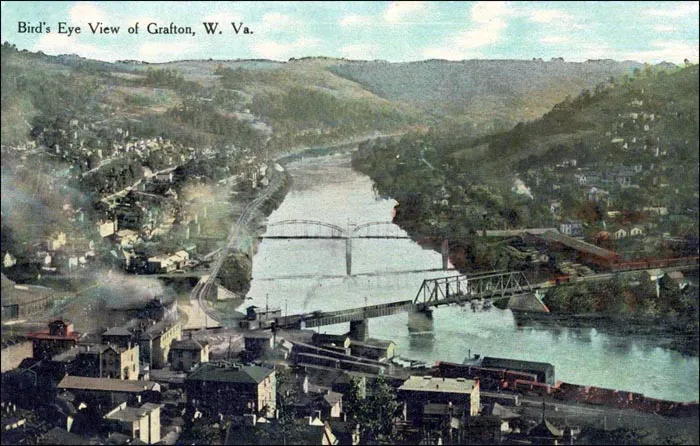 Photo: Grafton, West Virginia, via www.carrchinacompany.com
Grafton, West Virginia, occupied a strategically significant position on the Baltimore and Ohio Railroad's main line and had built a modest but functioning economy around the repair shops, switching yards, and ancillary businesses that served the railroad's operations. When Grafton's business community joined the broader legal and regulatory campaign against discriminatory pricing in the 1880s and 1890s, they did so with genuine grievances and reasonable expectations of relief.
The Interstate Commerce Commission and subsequent state-level regulatory actions did, eventually, produce rulings favorable to communities like Grafton. Rate discrimination was curtailed. The legal victories were real.
The Baltimore and Ohio responded by modernizing its operations in ways that required fewer workers in fewer locations. The repair shops that had anchored Grafton's economy were consolidated into larger facilities elsewhere. The switching operations were rationalized. The legal remedy had addressed the pricing grievance while doing nothing to address the underlying reality: the railroad had always been at liberty to decide where it concentrated its operations, and a community that had made itself legally inconvenient was not a community that invited further investment.
Grafton did not collapse. But the trajectory it had anticipated — a growing railroad town whose grievances, once addressed, would become a foundation for expansion — did not materialize. The courthouse had delivered. The economy had not.
Pullman, Illinois, and the Aftermath of the 1894 Strike
The Pullman Strike of 1894 is primarily remembered as a labor dispute and a federal intervention. It was also, in a meaningful sense, a legal battle that the striking workers and their sympathizers eventually won — or at least partially won — through the court of public opinion and subsequent legislative action.
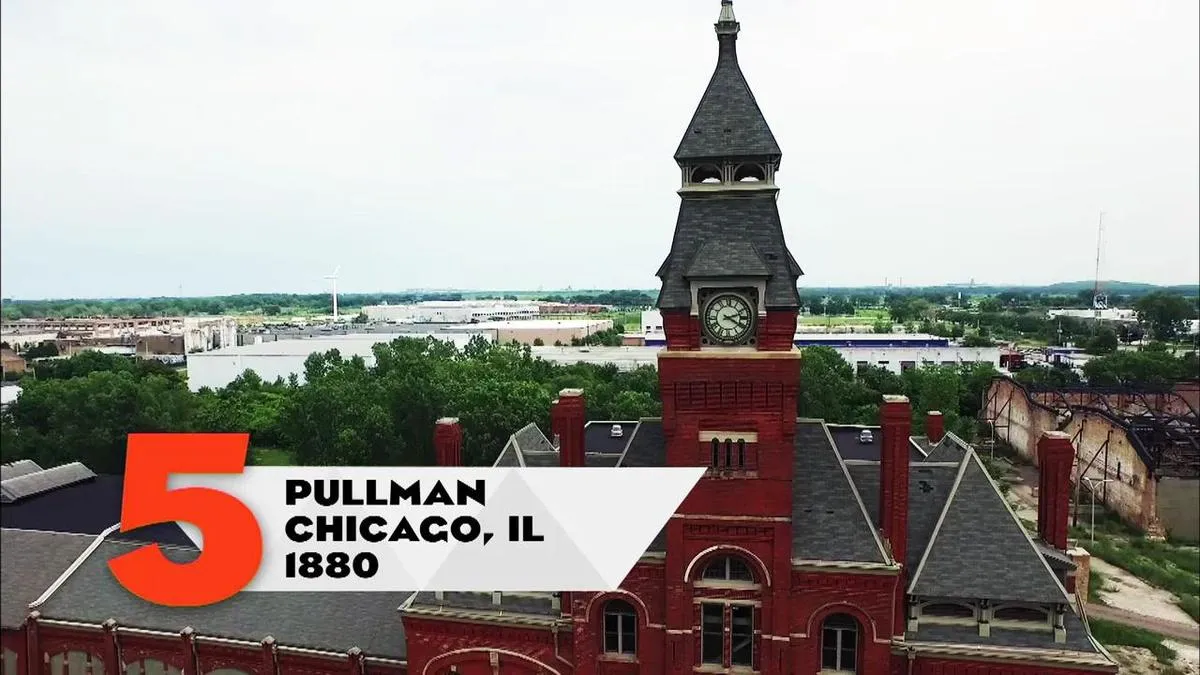 Photo: Pullman, Illinois, via image.pbs.org
The strike itself ended in defeat for the workers. Eugene Debs was imprisoned. The American Railway Union was broken. But the public and legal response to the strike's suppression contributed directly to the labor reform legislation of the following decades, and the specific abuses of the Pullman company town — the paternalistic control of workers' housing, wages, and commercial options — were ultimately condemned by a federal commission whose findings shaped subsequent labor law.
The town of Pullman was absorbed into Chicago in 1889, but the Pullman Palace Car Company's operations remained the dominant economic reality of the neighborhood through the early twentieth century. When the company's model was legally and regulatorily undermined, when the company town structure was effectively prohibited, and when labor protections made the original Pullman business model less profitable, the company did not reform itself into a model employer. It contracted, automated, and eventually ceased to be the economic anchor it had been.
The workers who had fought for the legal reforms that dismantled the company town's abuses were right to fight for them. The abuses were genuine and the reforms were necessary. But the community that had organized itself around the Pullman company's operations discovered that being freed from exploitation and being provided with an alternative economic foundation were entirely different things. The legal victory addressed the wrong. It did not replace the economy.
Hazard, Kentucky, and the Broad Form Deed Campaigns
Few legal battles in American history have been as morally unambiguous as the campaign against the broad form deed in eastern Kentucky. These instruments, signed by landowners in the late nineteenth and early twentieth centuries, had transferred mineral rights to coal companies under terms that allowed surface destruction without compensation to the surface owner. Families watched their land strip-mined while courts told them, correctly under the existing law, that they had no legal recourse.
 Photo: Hazard, Kentucky, via i.ytimg.com
The campaign to overturn the broad form deed through legislation and constitutional amendment was decades long, bitterly fought, and ultimately successful. In 1988, Kentucky voters approved a constitutional amendment that effectively nullified the deeds' most destructive provisions. It was a genuine victory for the surface landowners who had been exploited under them.
The coal companies responded to the changed legal environment by accelerating the shift toward mining methods and locations that the new legal constraints made more economical. Investment in Kentucky's coalfields, already declining due to competition from western coal and natural gas, declined further. The communities that had organized themselves around coal extraction found that the legal protections they had won did not produce an alternative economic structure to replace the one that was contracting.
Hazard and the surrounding communities had fought a just fight and won it. The severance tax revenues declined. The employment figures continued their long fall. The legal victory was real and the exploitation it ended was genuine. The prosperity that was supposed to follow the removal of injustice did not arrive on the schedule that justice seemed to promise.
The Recurring Psychology of Righteous Calculation
What these communities share is not bad judgment. Each of them was responding rationally to genuine injustice. The railroads did discriminate. The Pullman company did exploit its workers. The broad form deeds were instruments of dispossession. The legal remedies pursued were appropriate responses to real harms.
What they also share is a psychological tendency that history documents with uncomfortable consistency: the conflation of moral vindication with material improvement. A community that has been wronged experiences the legal correction of that wrong as the restoration of a proper order — an order in which prosperity and justice are aligned. The courthouse victory feels like the beginning of a better economic chapter because it feels like the end of an unjust one.
But the corporations and investors who made the economic decisions that governed these communities' futures were not responding to the moral arc of the universe. They were responding to the altered cost-benefit calculations that legal victories produced. A community that had demonstrated its willingness to use legal mechanisms against corporate interests had also demonstrated something else: that operating there carried regulatory and litigation risk that operating elsewhere did not.
This is not a defense of the corporate behavior that produced these outcomes. It is a description of how capital moves, which is without sentiment and without regard for the justice of the legal rulings it is departing from.
The ledger has recorded this pattern across three centuries of American economic history. The communities that understood it did not necessarily stop fighting for legal remedies — some injustices are worth fighting regardless of economic consequence. But the ones that navigated the aftermath most successfully were the ones that understood, before the verdict was read, that winning in court and winning in the market were two different contests requiring two different strategies. History has been making this point for a very long time.