Signed Under Protest: The Long History of Men Who Endorsed Documents They Privately Condemned

A signature is supposed to mean something. In law, in commerce, and in the civic mythology that Americans have constructed around their founding documents, the act of signing one's name to a document is understood as an assertion — a declaration that the signer endorses what the document contains and accepts responsibility for what it sets in motion. The history of American governance suggests this understanding is, at best, incomplete.
The archives are full of men who signed documents they opposed. Some recorded their reservations in letters. Some expressed them in convention debates that were sealed for decades. Some said nothing publicly and said everything privately, in correspondence that historians have spent two centuries excavating. What they share is the experience of placing a name on a page while believing, with varying degrees of conviction, that the page was wrong.
Understanding why they did it requires no theory of exceptional historical circumstance. It requires only a clear-eyed recognition of what institutional loyalty demands of individuals, and what individuals have always been willing to sacrifice to remain within the institutions that give their lives meaning.
Philadelphia, 1787: The Dissent That Signed Anyway
The Constitutional Convention of 1787 produced a document that thirty-nine of the fifty-five delegates present ultimately signed. The sixteen who did not have received considerable historical attention. What has received less attention is the number of the thirty-nine who signed while harboring serious, documented reservations about what they were endorsing.
Benjamin Franklin's closing address to the convention is the most famous example. Franklin, at eighty-one the oldest delegate present, told his colleagues that he did not entirely approve of the Constitution and doubted whether he ever would. He signed it anyway, on the grounds that no assembly of men could produce a perfect document, and that the alternative to this imperfect one was no constitution at all.
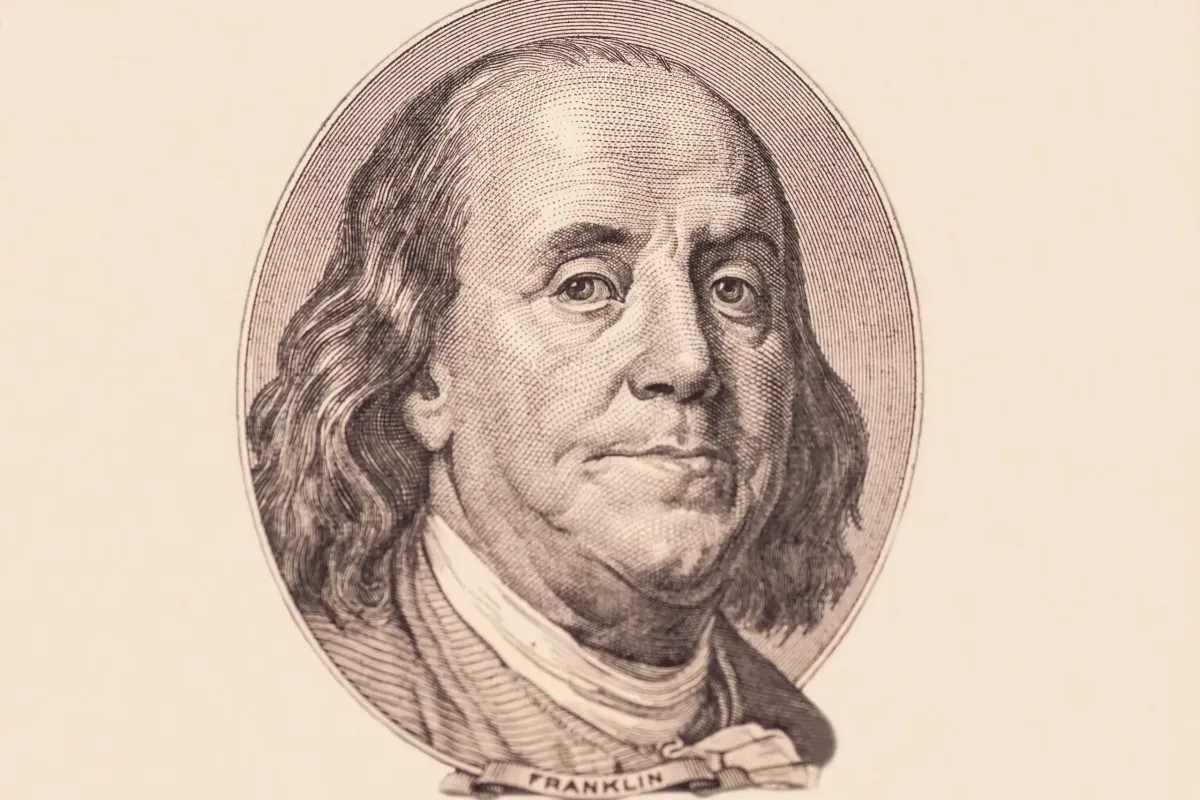 Photo: Benjamin Franklin, via swimcore.co.uk
Franklin's position was principled and coherent. But it was also the position of a man who had spent his life understanding that institutions are built from compromises, and that the man who refuses to participate in an imperfect institution does not thereby improve it. He simply removes himself from the conversation.
Alexander Hamilton's situation was more pointed. Hamilton had argued at the convention for a far more centralized government than the Constitution established — one with a president serving for life and the power to appoint state governors. He believed the document as written was dangerously weak. He signed it. He then spent the next several years writing the most influential defense of it ever produced, arguing in the Federalist Papers for a document he had privately described as inadequate to the challenges the young republic would face.
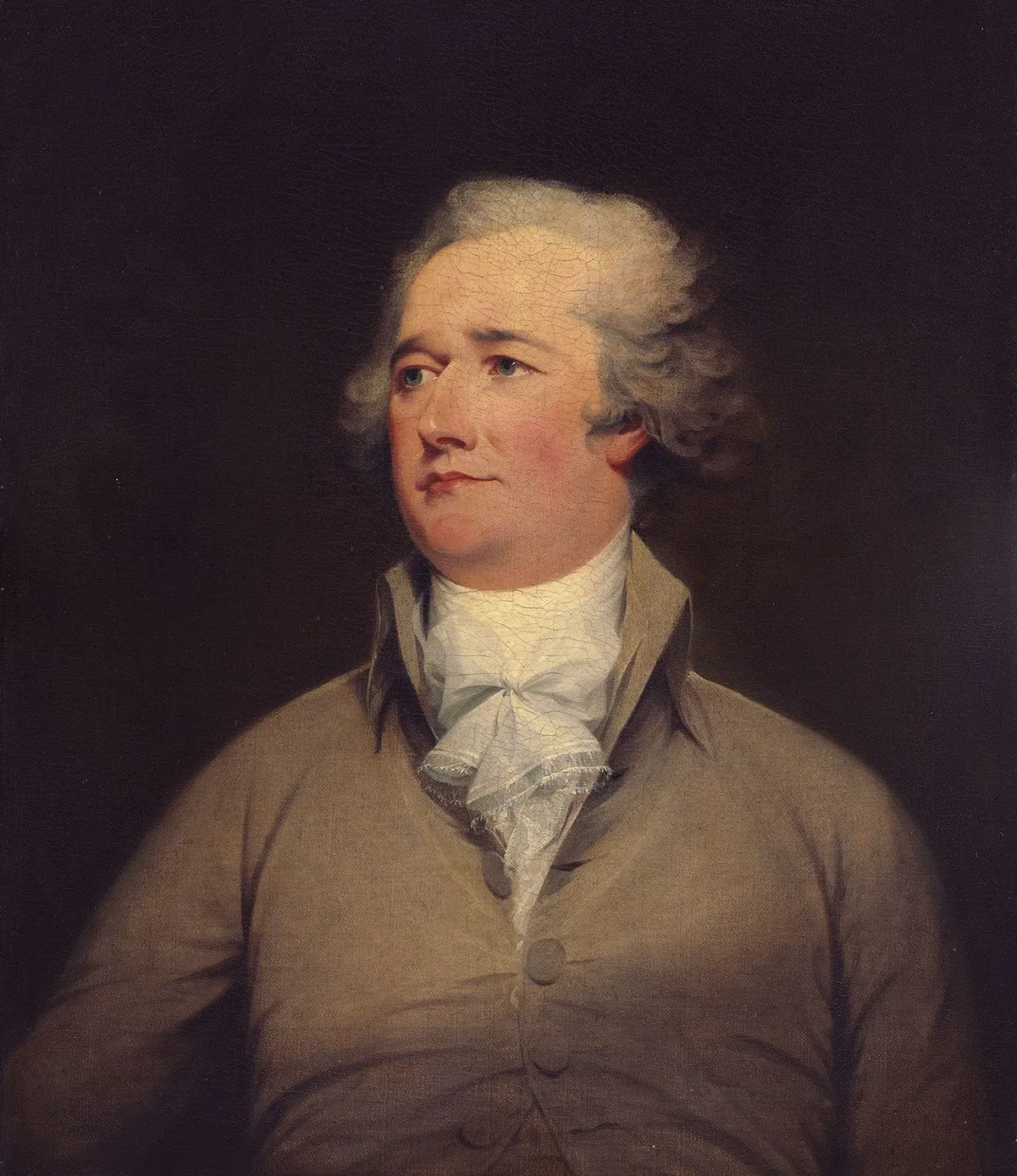 Photo: Alexander Hamilton, via cdn.britannica.com
Hamilton was not being dishonest, exactly. He believed a weak constitution was better than none, and he believed that the energetic administration he intended to provide as Treasury Secretary could compensate for structural deficiencies. But the gap between his public advocacy and his private assessment was substantial, and it illuminates something important: the Federalist Papers, the founding document of American constitutional interpretation, were written by a man who did not fully believe in the document he was defending.
The Missouri Compromise and the Signatures of Exhaustion
The great crises of the antebellum period produced their own category of reluctant signatories — men who signed not from institutional loyalty exactly, but from the exhaustion of having fought and lost. The Missouri Compromise of 1820 was negotiated and signed by legislators who understood, with varying degrees of clarity, that they were not solving the problem of slavery's expansion. They were postponing it.
Henry Clay, who engineered the compromise and whose political identity became inseparable from it, was not under any illusion that he had resolved the underlying conflict. His letters from this period document a man who understood perfectly well that he had purchased time rather than peace, and that the price of that time was the legitimation of slavery's expansion into new territories. He signed because the alternative — the dissolution of the Union that he regarded as the supreme political achievement of his era — seemed worse than the compromise's moral costs.
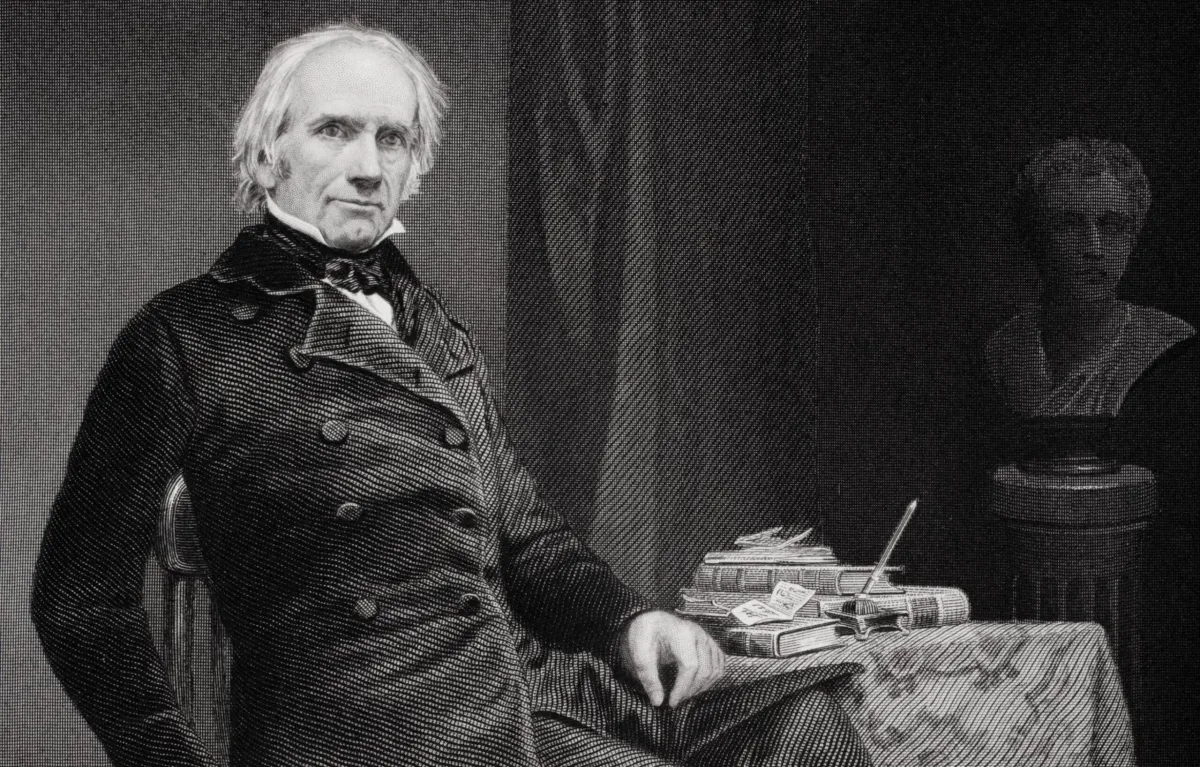 Photo: Henry Clay, via engelsbergideas.com
The psychology here is distinct from Franklin's philosophical acceptance of imperfection. Clay's signature was an act of prioritization: the preservation of the institutional structure he valued above the moral principle he was sacrificing to preserve it. This is not a comfortable calculus, and Clay did not find it comfortable. But it is a recurring one in the historical record, and it appears wherever men who have devoted their lives to institutions face the choice between the institution's survival and their own convictions.
The Legislative Signatures of the Twentieth Century
The pattern did not end with the founding generation. The twentieth century produced its own archive of reluctant endorsements, signed by men who had argued against the documents they were ultimately compelled to support.
The Social Security Act of 1935 was signed into law by Franklin Roosevelt, who had reservations about several of its structural provisions — particularly the regressive payroll tax that funded it. Roosevelt's Treasury Secretary, Henry Morgenthau, had argued internally for a more progressive funding mechanism. The final bill reflected compromises made to secure Southern Democratic support, compromises that excluded agricultural workers and domestic servants — the majority of Black workers in the South — from coverage. Legislators who had fought for a more inclusive program signed a bill that excluded millions of the people they had intended to protect, because the alternative was no program at all.
The Civil Rights Act of 1964 was signed by Lyndon Johnson, who understood its passage as a political transformation that would reshape American electoral politics for generations. Johnson's private assessment, recorded by his aide Bill Moyers, was that the Democratic Party had delivered the South to the Republicans for a generation by passing it. He signed it because he believed it was right, but his signature was not the uncomplicated affirmation that the ceremony suggested. It was a man endorsing a document whose consequences he anticipated with something close to dread.
What the Signature Actually Means
The recurring pattern across these cases is not hypocrisy, though hypocrisy is sometimes present. It is the operation of a specific psychological mechanism: the recognition that institutions require individuals to subordinate their private judgments to the collective decisions of the bodies they belong to, and that the alternative to this subordination is not the triumph of individual conviction but the dissolution of the institution itself.
Men who have built their identities around institutions — the Constitutional Convention, the United States Senate, the Roosevelt administration — do not easily choose the purity of dissent over the continuity of the institution. The institution is where their power resides, where their relationships are maintained, where their legacies will be recorded. To walk away from it over a single document, however important, is to sacrifice all of that for a principle that the document will override regardless.
This is not an admirable calculation, necessarily. But it is a human one, and it is one that history has documented with extraordinary consistency across cultures, centuries, and contexts. The psychological study that produced this finding did not require a laboratory. It required only the full collected record of what men have done when their convictions and their institutions pointed in different directions.
The ledger entry is always the same: the institution wins. The signature goes on the page. The private reservations go into the correspondence that historians will read two centuries later, shaking their heads at the gap between what these men believed and what they endorsed. That gap is not a failure of character, exactly. It is a feature of how power organizes itself — and how human beings, across every era the record covers, have chosen to remain within it.