The Edited Ledger: How American Business Learned to Bury Its Most Instructive Failures
There is a version of the American business story that begins with a garage, a handshake, and a conviction that bordered on the irrational. It ends, almost always, in triumph. The intervening years are compressed, selectively lit, and scrubbed of the episodes that would complicate the moral. This is not accident. It is a psychological operation, conducted across generations, that has shaped how an entire culture understands accountability—and how thoroughly it can be avoided.
History, as a discipline, offers something that no laboratory experiment on a distracted undergraduate ever could: five thousand years of evidence about what human beings actually do when they fail. And what the record shows, with remarkable consistency, is that they rewrite it.
The Mechanics of Selective Memory
The phenomenon is not unique to America, but it has flourished here with particular vigor. The cultural scaffolding was already in place. A nation that defined itself through reinvention—the frontier, the immigrant arrival, the second chance—was always going to be more comfortable with the resurrection story than the autopsy report.
Consider the pattern that repeated itself across the nineteenth century. Canal companies that collapsed under mismanagement and fraud were often succeeded, within a decade, by railroad ventures whose promotional literature made no mention of the previous enterprise's demise. The investors were sometimes the same men. The language of prospectuses was almost identical. The failures had been quietly composted into new soil.
This was not merely cynicism. It was, in a precise psychological sense, adaptive behavior. The entrepreneur who dwells too long on past catastrophe loses the capacity for the optimism that new ventures require. There is a survival logic to forgetting. The problem arises when forgetting becomes institutional rather than personal—when organizations encode the erasure into their official histories and deprive future participants of the very information that might prevent repetition.
The Sanitized Origin Story
By the late nineteenth century, American corporations had begun to understand that their histories were assets to be managed. The origin story—crafted, polished, and distributed through annual reports, commemorative pamphlets, and eventually public relations departments—served a function that had nothing to do with accuracy. It was a psychological instrument designed to produce trust.
The great meatpacking firms of Chicago provide a useful case. By the 1890s, several of the largest had already survived multiple episodes of adulterated product, labor violence, and financial manipulation. Their promotional materials of the period presented instead a narrative of steady, upright growth from humble immigrant origins. The catastrophes were not mentioned. The sanitized version was not merely more flattering; it was more useful. It told customers, investors, and regulators what they needed to believe in order to continue their participation.
This dynamic—failure replaced by founding myth—appears with such regularity across American business history that it begins to look less like deception and more like a deeply ingrained cognitive habit. The human mind resists holding two contradictory self-images simultaneously. A company cannot simultaneously be the reliable institution its customers require and the chaotic, failure-prone enterprise its history actually documents. One of those identities must yield. In American business culture, it has almost always been the honest one.
What the Archive Actually Contains
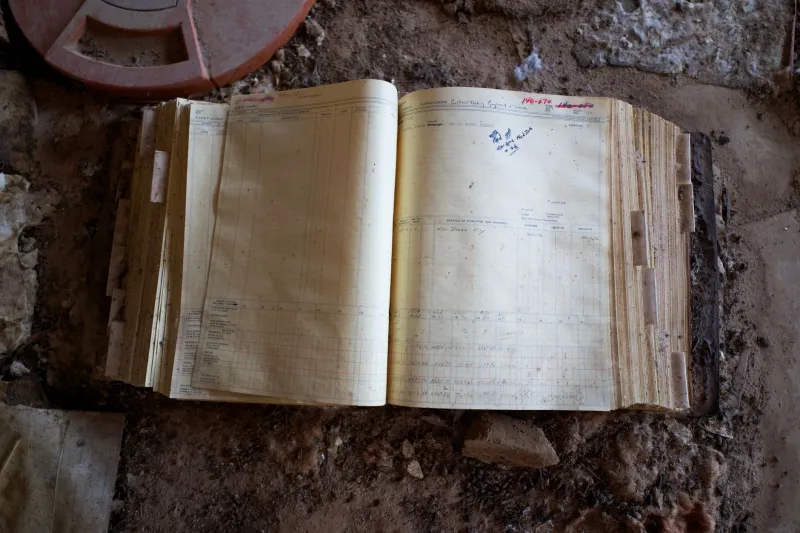
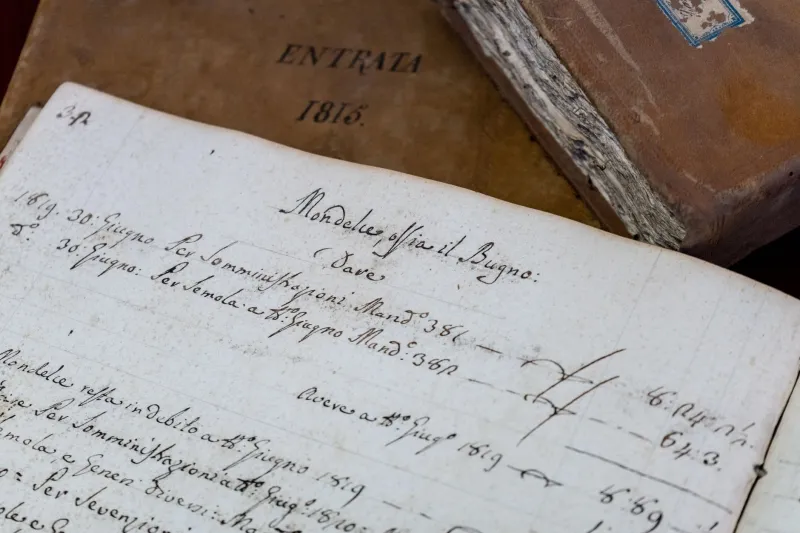
The court records tell a different story. So do the bankruptcy filings, the insurance claims, the letters between partners that were never intended for public consumption. When historians have gone looking for the failures that official accounts erased, they have found them in abundance—and found, too, that the failures were rarely as shameful as the concealment suggests they were.
The Panic of 1837 destroyed hundreds of mercantile firms across the eastern seaboard. The survivors rebuilt, and many of them rebuilt well. But the rebuilding was almost universally accompanied by a narrative reconstruction in which the collapse was minimized, attributed to external forces beyond anyone's control, or omitted entirely from the firm's subsequent self-presentation. The psychological need this served is transparent: if the failure was your fault, you are a man who fails. If it was the fault of Andrew Jackson's banking policies, or British credit contraction, or forces too vast for any individual to resist, you remain a man temporarily interrupted by circumstances.
The distinction matters enormously to the human psyche. It matters rather less to the historical record, which preserves both versions and allows comparison.
The Cost of the Erasure
The practical consequences of this selective amnesia are not abstract. When failure narratives are systematically suppressed, the information contained in those failures—about which business models collapse under specific conditions, which management structures produce fraud, which market assumptions prove catastrophically wrong—is lost to the next generation of participants.
This is not a modern observation. Benjamin Franklin understood it well enough to make it the organizing principle of his autobiography, which is notable among founding-era documents precisely because it includes, with apparent relish, the author's own considerable failures and miscalculations. Franklin grasped something that subsequent American business culture largely abandoned: the failure, examined honestly, is more instructive than the success.
The twentieth century institutionalized the suppression. Public relations as a professional discipline emerged in the 1910s and 1920s partly as a mechanism for managing the narrative distance between what corporations did and what the public was permitted to know about it. The failure, in this framework, was not an educational event. It was a liability to be contained.
The Psychological Bargain
What does the erasure actually purchase? In the short term, it purchases continued access to capital, customers, and social legitimacy. A firm known for its failures attracts less investment than one whose history appears unblemished. The incentive structure is clear and the behavior it produces is entirely predictable.
But the deeper bargain is psychological rather than financial. American culture has always placed unusual moral weight on success, treating it as evidence of character rather than circumstance. Failure, correspondingly, carries a moral charge that other cultures distribute more evenly. To have failed in America is not merely to have encountered bad fortune; it is, in the cultural imagination, to have revealed something about the quality of one's soul.
This is an extraordinarily heavy burden to place on ordinary commercial misfortune, and it explains why the erasure is so thorough and so persistent. The edited ledger is not simply a public relations strategy. It is a psychological defense against a cultural verdict that equates bankruptcy with unworthiness.
History, which has watched this transaction play out across centuries and continents, offers a cooler assessment. The businesses that failed and said so—that incorporated their catastrophes into their institutional memory and trained the next generation of managers on what went wrong—were, on the available evidence, more durable than those that perfected the art of forgetting. The ledger, it turns out, is more useful when it is complete.