Obligations That Outlived Their Makers: The American Compulsion to Honor Debts to the Dead
In 1887, a farming family in central Ohio completed the final payment on a land contract that their grandfather had signed in 1841. The original creditor had died in 1863. His estate had been settled, distributed, and largely dispersed. The family's payment went to a grandniece in Pennsylvania who had never met the debtor, had no particular need of the money, and expressed mild surprise at receiving it. The family, by most contemporary accounts, experienced profound relief.
This episode is not exceptional. It belongs to a pattern that runs through American commercial and legal history with sufficient regularity to constitute something closer to cultural behavior than individual conscience. Americans have, across several centuries, demonstrated a remarkable willingness to honor financial obligations to parties who could no longer enforce them, sue for them, or in many cases even be located. Understanding why requires examining not the law — which frequently did not compel such behavior — but the psychology that the law was built to reflect.
The Contract as Sacred Object
American contract law inherited from English common law a framework that treated the written agreement as a kind of moral instrument, not merely a commercial one. But the American elaboration of this tradition went considerably further than its English antecedent. In a society that was, through the eighteenth and nineteenth centuries, constructing its legitimacy from scratch, the sanctity of private agreements served a function that extended well beyond commerce.
If the social contract itself — the foundational agreement between citizens and their government — was to be taken seriously, then all contracts had to be taken seriously. The philosophical consistency demanded it. To walk away from a debt because the creditor had died was not merely a financial decision. In the moral economy of nineteenth-century America, it was a statement about the kind of person you were, the kind of community you belonged to, and the reliability of the entire system of voluntary agreement on which republican society claimed to rest.
This is not a cynical observation. It is a structural one. History is the longest psychology study ever run, and it consistently shows that human beings do not evaluate obligations in purely rational terms. We evaluate them in terms of identity, reputation, and social belonging. The Ohio farmer who paid a debt to a stranger in Pennsylvania was not acting irrationally. He was acting in precise accordance with the social psychology of his community.
Inherited Obligations and the Communities They Shaped
The phenomenon of multi-generational debt honoring was not confined to individual families. It shaped the development of entire towns and counties, particularly in regions where land tenure was disputed or where early commercial relationships had been inadequately documented.
In parts of the antebellum South and the post-frontier Midwest, communities organized themselves around the inherited financial relationships of their founders with a degree of fidelity that frequently defied economic logic. Families maintained business relationships with the descendants of original creditors and debtors long after any legal compulsion to do so had expired. Disputes that might have been resolved through straightforward legal processes were instead mediated through elaborate social negotiations that treated the original agreement as a kind of living document, still binding because the community had collectively decided it should be.
This had practical consequences that were not always benign. Inherited obligations could trap families in unfavorable arrangements that a clean legal settlement would have ended. They could concentrate wealth in the descendants of original creditors in ways that bore no relationship to current productivity or merit. They could, and frequently did, embed the economic mistakes of one generation permanently into the landscape of the next.
The Psychology of Posthumous Accountability
Why did Americans honor debts to the dead? The behavioral explanation is more interesting than the moral one. Research in social psychology consistently demonstrates that human beings experience obligations to absent or deceased parties with nearly the same psychological force as obligations to present ones, provided that the original relationship was sufficiently salient and that community awareness of the obligation exists.
The community awareness element is critical. The Ohio farmer's debt was not a private matter. His neighbors knew of it, as their neighbors had known of it before them. In a community where reputation was a form of capital — in many cases, the primary form of capital available to people of modest means — the cost of default did not disappear with the creditor. It persisted in the social memory of the community, attached now not to a financial transaction but to a character judgment.
This is not irrational. In a world without credit scores, financial histories, or institutional lending relationships, reputation for contract-keeping was a genuine economic asset. The farmer who paid his grandfather's debt was not merely performing sentiment. He was making a rational investment in his own commercial credibility, denominated in the currency his community actually used.
When Honoring the Past Becomes Its Own Trap
The complications arise when the psychological infrastructure of obligation outlasts its economic justification — when communities continue to treat inherited financial relationships as binding long after the conditions that made such treatment rational have changed.
This pattern recurs throughout American commercial history with troubling consistency. Towns that organized their economies around honoring relationships with defunct creditor institutions found themselves unable to pursue more advantageous arrangements when those became available. Families that treated inherited debt as a matter of honor rather than contract frequently sacrificed economic mobility for moral consistency. The same psychological architecture that made early American commercial society function — the treatment of contracts as identity statements rather than mere transactions — became, under certain conditions, a mechanism for perpetuating disadvantage across generations.
The legal system, to its credit, eventually developed doctrines specifically designed to interrupt this pattern. Statutes of limitations, discharge in bankruptcy, and the legal principle that obligations do not automatically transfer to heirs all represent deliberate interventions against the psychological tendency to treat past agreements as permanently binding. That these legal tools had to be constructed at all is evidence of how strong the underlying psychological pull was.
What Respect for the Past Actually Costs
The American tradition of honoring debts to the dead is, at its root, a story about the confusion of two distinct things: respect for the past and rational self-interest. These are not the same, and the historical record is full of communities that learned the difference at considerable expense.
Respecting the past means acknowledging the role that prior agreements, prior relationships, and prior commitments played in creating present conditions. It is a legitimate and useful orientation. Treating the past as a creditor with permanent claims on the present is something else entirely — a psychological disposition that masquerades as virtue while functioning, in practice, as a constraint on adaptation.
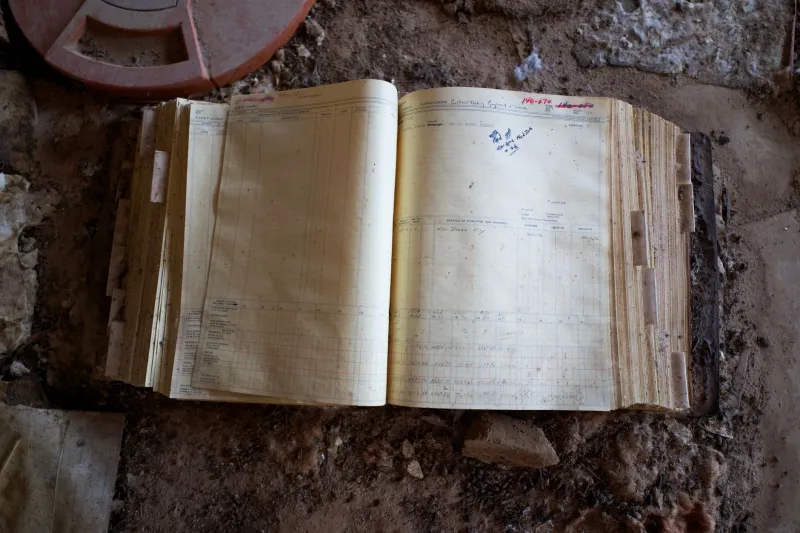
The old ledger deserves to be read. It does not necessarily deserve to be paid.