The Reformer's Trap: How One Man's Crusade for Clean Food Built the Pharmaceutical Industry's Favorite Weapon
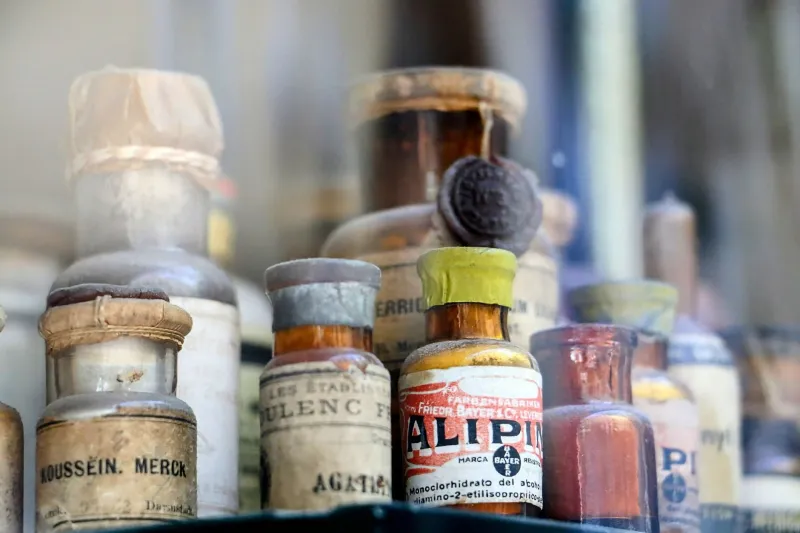
The Reformer's Trap: How One Man's Crusade for Clean Food Built the Pharmaceutical Industry's Favorite Weapon
History keeps a running account of well-intentioned men who solved one problem by creating a larger one. The ledger entry for Harvey Washington Wiley is among the most instructive. A chemist by training and a moralist by temperament, Wiley arrived in Washington in 1883 as chief of the Bureau of Chemistry and spent the next quarter-century in a state of controlled outrage at what American manufacturers were selling their customers. He was not manufacturing grievances. The food and medicine of the late nineteenth century was, by any reasonable standard, a carnival of fraud and danger.
Patent medicines containing morphine were marketed to mothers for colicky infants. Whiskey was cut with industrial alcohol. Preserved meats were treated with chemicals whose names most consumers could not pronounce and whose effects no one had systematically studied. Wiley's response was to pursue federal legislation with the kind of single-minded persistence that tends to produce either great reform or great catastrophe, and occasionally both simultaneously.
The Pure Food and Drug Act of 1906 was his monument. It was also the first brick in a wall that took another generation to complete.
What the Law Actually Said — and What It Left Open
The 1906 Act was, by the standards of its era, genuinely radical. It required that drugs meet standards of strength and purity. It prohibited the sale of adulterated or misbranded food and medicine in interstate commerce. It gave federal inspectors real authority. Wiley celebrated it as a victory for the consumer, and in the immediate term, it was.
But the statute contained a structural ambiguity that would prove consequential. It regulated what products claimed and whether they were pure. It did not, in any systematic way, require that they be proven effective before reaching the market. The distinction seems technical. It is, in practice, the entire game.
The law established federal authority over the medicine cabinet without establishing federal authority over the science behind it. That gap would persist for another thirty years, until the sulfanilamide disaster of 1937 — in which over a hundred Americans died from a drug dissolved in an untested solvent — finally forced Congress to pass the Food, Drug, and Cosmetic Act of 1938, which required proof of safety before sale. Proof of efficacy would not be required until the Kefauver-Harris Amendment of 1962.
By then, the architecture was fully in place. And the pharmaceutical industry had learned to live inside it.
The Psychology of the Gatekeeper
Human beings have understood the value of controlling access to something scarce for as long as there has been something scarce to control. What Wiley's regulatory framework produced was a government-administered scarcity of market entry. The approval process, once established, did not merely protect consumers. It protected incumbent manufacturers from competitors who lacked the capital to navigate it.
This is not a conspiracy. It is a structural inevitability that anyone who has studied the history of regulatory bodies could have predicted, and several economists did. When you create a powerful agency, you create a powerful incentive to influence that agency. The regulated industry is always better organized, better funded, and more persistently attentive to the regulator than the diffuse public the regulator was created to serve. Political scientists call this regulatory capture. The historical record calls it Tuesday.
By the mid-twentieth century, the pharmaceutical industry had developed a sophisticated relationship with the Food and Drug Administration that bore only a passing resemblance to the adversarial dynamic Wiley had imagined. Companies helped write the technical standards they would later be required to meet. The approval process, which could cost hundreds of millions of dollars to navigate, became a competitive advantage for large firms and an existential barrier for small ones. Generic drug manufacturers faced legal and procedural obstacles that had nothing to do with safety and everything to do with market protection.
 Photo: Food and Drug Administration, via logodix.com
Wiley's Blind Spot
Wiley was a man of his era in at least one important respect: he trusted institutions he controlled and distrusted commerce he did not. His model assumed that the regulator would remain permanently adversarial to the regulated, that the reformer's spirit would somehow be institutionalized indefinitely. History offers very little support for this assumption.
The psychological profile of the crusading reformer is well documented across centuries and cultures. There is a particular cognitive pattern — call it righteous certainty — in which the reformer becomes so convinced of the correctness of the solution that scrutiny of the solution itself begins to feel like sympathy for the problem. Wiley exhibited this pattern with some consistency. He fought bitterly against colleagues and successors who questioned his methods. He personalized bureaucratic disagreements. He confused his own judgment with scientific consensus.
None of this diminishes the genuine harm he helped prevent. It does explain how a man who spent his career fighting concentrated commercial power managed to build the mechanism through which concentrated commercial power would eventually be entrenched.
The Playbook That Never Goes Out of Print
The pharmaceutical industry did not invent regulatory capture. It refined an approach that the railroad industry had pioneered, that the banking industry had practiced, and that virtually every heavily regulated sector in American history has eventually mastered. The pattern is consistent enough across centuries and industries to qualify as a psychological law rather than a political accident.
First, resist regulation. Second, once resistance fails, shape the regulation. Third, once the regulation exists, use it. The third phase is the most durable because it requires no further political action. The barrier simply sits there, enforced by the government, maintained at public expense, serving private interests while wearing the costume of public protection.
Wiley's story is not a cautionary tale about the folly of reform. It is a precise illustration of what happens when reformers fail to account for the full range of human motivation — including their own. The men who lobbied against the Pure Food and Drug Act in 1906 were not more psychologically complex than the men who lobbied to shape every subsequent amendment. They were the same kind of men, pursuing the same kind of interests, through whatever channels the era made available.
The medicine cabinet Wiley wanted to clean up is now one of the most profitable retail spaces in the American economy. The companies that stock it operate under rules that their own lobbyists helped draft, enforced by an agency that their own personnel help staff, in a regulatory environment that their own legal teams helped construct.
Wiley would almost certainly have been appalled. He would also, if he were honest, have recognized the machinery. He built the first version of it himself.