The Penalty for Being Right: What Institutions Do to the People Who Correct Them

The history of accurate prediction is not a story of vindication. It is a story of punishment followed, occasionally, by posthumous rehabilitation — a sequence that does the vindicated party very little practical good. The people who got the important questions right before their institutions were prepared to hear the answers did not receive promotions and grant funding. They received professional exile, personal ridicule, and in some cases genuine destruction.
History is the longest psychology study ever run, and on the question of how human institutions respond to accurate heterodoxy, it has been running controlled experiments for centuries. The results are consistent enough to constitute a finding: institutions are structurally organized to resist the information they most urgently need, and they do so not through malice but through mechanisms that are, from the perspective of the institution's existing membership, entirely rational.
Understanding why requires looking carefully at what accurate heterodoxy actually threatens.
Semmelweis and the Politics of Handwashing
Ignaz Semmelweis identified in 1847 that puerperal fever — the infection killing women at alarming rates in Vienna's maternity wards — was being transmitted by physicians who moved directly from performing autopsies to delivering babies without washing their hands. The evidence he assembled was substantial. The intervention he proposed was trivially simple. The mortality reduction when his protocol was followed was dramatic and immediate.
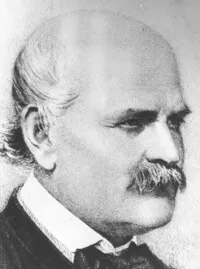 Photo: Ignaz Semmelweis, via www.washingtonpost.com
The medical establishment of mid-nineteenth century Vienna did not adopt his findings. It rejected them, and it rejected him. He was removed from his position, denied institutional support, and subjected to sustained professional humiliation. He died in 1865 in a mental institution, apparently from the same type of infection he had spent his career trying to prevent.
The standard explanation for this outcome is that germ theory had not yet been established, and so Semmelweis's mechanism was scientifically incomplete. This is accurate but insufficient. The deeper explanation is that his findings, if accepted, would have required the medical profession to acknowledge that its practitioners had been killing the patients they were treating. The institutional cost of that acknowledgment — in status, in legal exposure, in the psychological disruption of professional identity — was enormous. The individual physicians who rejected Semmelweis were not stupid. They were protecting something real, and the protection mechanism was the dismissal of evidence that threatened it.
Wegener and the Immovable Consensus
Alfred Wegener proposed the theory of continental drift in 1912, arguing from fossil distribution, geological formations, and the unmistakable fit of continental coastlines that the Earth's landmasses had once been joined and had since separated. The geological establishment of the early twentieth century found his theory not merely wrong but offensive — the work of an amateur (Wegener was primarily a meteorologist) intruding on a settled discipline.
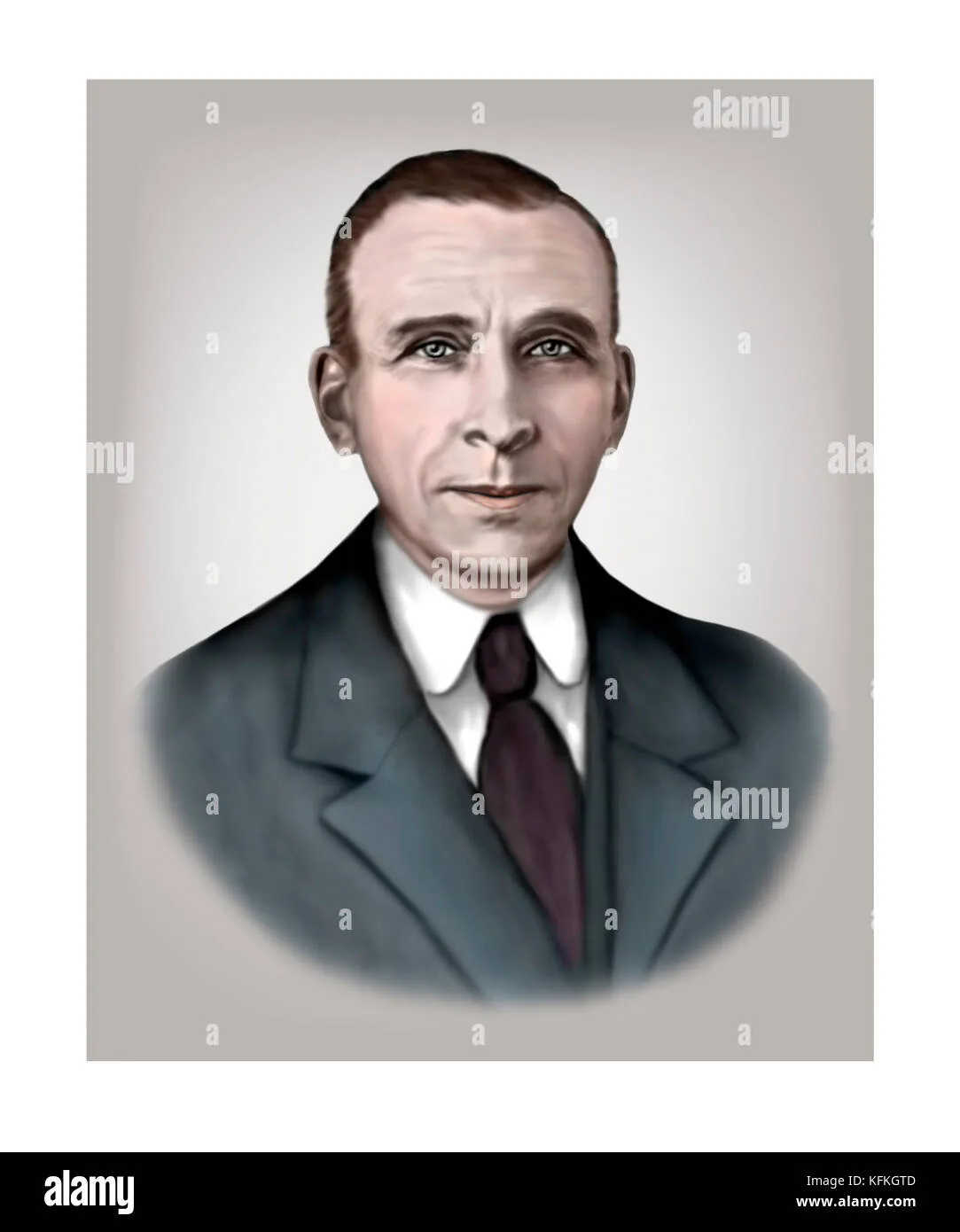 Photo: Alfred Wegener, via c8.alamy.com
For roughly four decades, continental drift was the position of cranks. Wegener died in 1930 on a Greenland expedition, professionally marginalized. The geological consensus that eventually vindicated him — plate tectonics, confirmed by mid-century ocean-floor mapping — did not arrive until the 1960s. The mechanism he described was correct. The evidence he cited was real. The consensus that dismissed him was wrong for fifty years and enforced that wrongness with the full institutional authority of the discipline.
What Wegener's case illustrates, and what the Semmelweis case confirms, is that the social mechanism for dismissing premature accuracy is not primarily intellectual. It is credentialist. The question that institutions ask of a heterodox claim is not first "is this true?" but rather "who is saying it, and from what position?" A meteorologist proposing to revise geology could be dismissed on procedural grounds without engaging the substance of the argument. The procedural dismissal is faster, cheaper, and far less threatening than genuine evaluation.
American Business and the Early Cassandras
The pattern is not confined to natural science. American business history contains its own catalog of accurate early warnings that were institutionally suppressed, ridiculed, or ignored until the cost of ignoring them became undeniable.
Roger Babson predicted the 1929 crash months before it occurred and was publicly mocked as a professional alarmist by the financial press and by the economists who had staked their reputations on the permanence of prosperity. He was right. The economists who mocked him were wrong. Their careers, in most cases, survived the correction better than his reputation survived the period of his accuracy.
In the 1960s and 1970s, a series of engineers and safety researchers within the American automotive industry identified structural safety deficiencies in vehicles that manufacturers were producing and selling. The institutional response — documented extensively in subsequent litigation and congressional testimony — was not to address the deficiencies but to manage the people raising them. Some were reassigned. Some were quietly pushed out. The information they carried was accurate. The institution's response to that accuracy was to contain the messenger rather than correct the product.
The business logic of this response is not difficult to reconstruct. Acknowledging a safety deficiency requires a recall, which has a calculable cost. Suppressing the internal dissenter has a lower immediate cost and a probabilistic future cost that, under standard corporate discounting, looks manageable. The institution is not being evil. It is optimizing for its own near-term survival using the same cognitive shortcuts that produce every other form of organizational myopia.
The Structural Logic of Premature Accuracy
What these cases share, across disciplines and centuries, is a structural dynamic that operates independently of the particular personalities involved.
Every institution organizes itself around a set of assumptions that its members have staked their careers, their status, and their identities on maintaining. Those assumptions are not arbitrary — they represent the accumulated consensus of people who were, in their time, the most credentialed and experienced practitioners in their fields. The consensus exists because it was, at some point, the best available answer.
When a new piece of information arrives that contradicts the consensus, the institution faces a genuine cost-benefit calculation. Accepting the new information requires revising the consensus, which means acknowledging that the people who built and maintained that consensus were wrong, which means reducing the status of those people and the value of the credentials they hold. Rejecting the new information costs nothing in the short term and requires only that the person carrying it be discredited.
The person is almost always easier to discredit than the information is to refute. This is especially true when the person carrying the information is outside the institution's credentialing hierarchy, as Wegener was, or is junior within it, as Semmelweis was. The institution's dismissal tools are calibrated for exactly these situations.
What Comes After
The rehabilitation of accurate heterodoxy, when it comes, tends to arrive through one of two mechanisms: external pressure that makes the cost of continued denial exceed the cost of revision, or generational turnover that removes the cohort whose status depended on the old consensus.
Neither mechanism is fast. Neither mechanism helps the person who was right too early. The lesson that history offers to the early-arriving accurate is not encouraging: being right is necessary but not sufficient, and the gap between necessity and sufficiency is paid for in careers, reputations, and years.
The lesson that history offers to institutions is more useful but equally unwelcome: the information you are most organized to suppress is probably the information you most need. The mechanisms that protect your consensus from premature revision are the same mechanisms that guarantee your consensus will be revised too late. Every institution that has ever existed has faced this problem. None has solved it. The ledger on this question has been open for five thousand years, and the same entry appears on every page.