When a Town Printed Its Own Dollar: The Depression-Era Scrip Experiments That Revealed Who Money Actually Belongs To

Photo by Photo by Andrew Dawes on Unsplash on Unsplash
In the winter of 1932, the city of Tenino, Washington found itself in a position that no economic textbook had prepared it for. The Citizen's Bank of Tenino had failed. The town's money supply had effectively ceased to exist. Commerce — the ordinary daily exchange of goods and labor that sustains a community — was collapsing not because the goods were gone or the labor was unwilling, but because the medium of exchange had vanished.
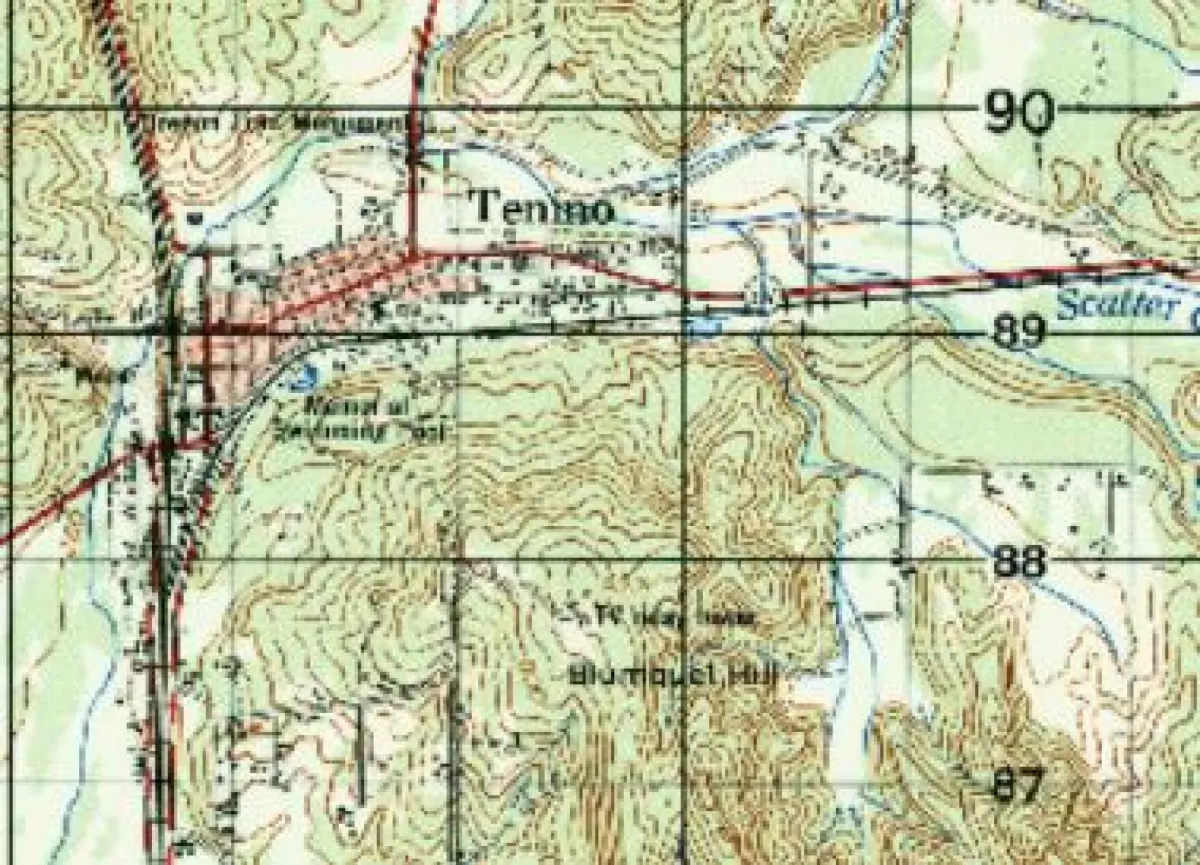 Photo: Tenino, Washington, via npr.brightspotcdn.com
The Tenino Chamber of Commerce did what communities throughout human history have done when official systems fail: it improvised. Working with local government, it issued scrip — emergency currency printed on thin slices of spruce wood — denominated in dollars and backed by deposits held in the failed bank's receivership. Residents accepted it. Merchants honored it. The local economy, in a modest but genuine sense, resumed functioning.
Tenino was not alone. Across the United States during the Depression's worst years, communities in California, Michigan, Iowa, Oregon, and elsewhere issued their own emergency currencies in forms ranging from professionally printed certificates to handwritten chits. Some were sophisticated instruments with demurrage fees designed to encourage circulation. Others were simple promises on paper. A surprising number of them worked — until Washington noticed.
The Mechanics of Confidence
To understand why local scrip functioned, it is necessary to set aside the conventional explanation of what money is. The textbook definition — a medium of exchange, a store of value, a unit of account — describes what money does without explaining what it is. What money actually is, as any serious monetary historian will confirm, is a shared agreement.
This is not a novel observation. It was understood by traders in ancient Mesopotamia, by medieval merchants who extended credit across borders on the basis of reputation alone, and by the colonial Americans who used tobacco, wampum, and warehouse receipts as currency when coin was scarce. The specific object designated as money is far less important than the collective decision to treat it as such. When that decision is sufficiently widespread and sufficiently stable, the object works. When it is not, no amount of official endorsement can make it function.
The Depression-era scrip experiments were, in this sense, natural experiments in monetary psychology. They tested whether communities could sustain the necessary collective agreement in the absence of federal authorization. In many cases, the answer was yes — and the conditions under which it worked were instructive.
Scrip functioned best in communities with high social cohesion, where the participants in the exchange network knew one another and could enforce the informal norms that give any currency its value. It functioned best when the issuing authority — a chamber of commerce, a county government, a civic organization — was locally trusted and locally accountable. It functioned best when the alternative was visible and immediate: people accepted wooden currency because the bank was closed and the alternative was barter or starvation.
The Stamp Scrip Experiment and Its Admirers
Among the more sophisticated Depression-era currency experiments was the adoption of stamp scrip, a concept developed by the Austrian economist Silvio Gesell and popularized in the United States by economist Irving Fisher. Stamp scrip carried a demurrage feature: holders were required to affix a small stamp to the currency each week to keep it valid, which meant that holding the currency cost money. The effect was to reverse the normal incentive to hoard during a crisis. Stamp scrip circulated rapidly because sitting on it was expensive.
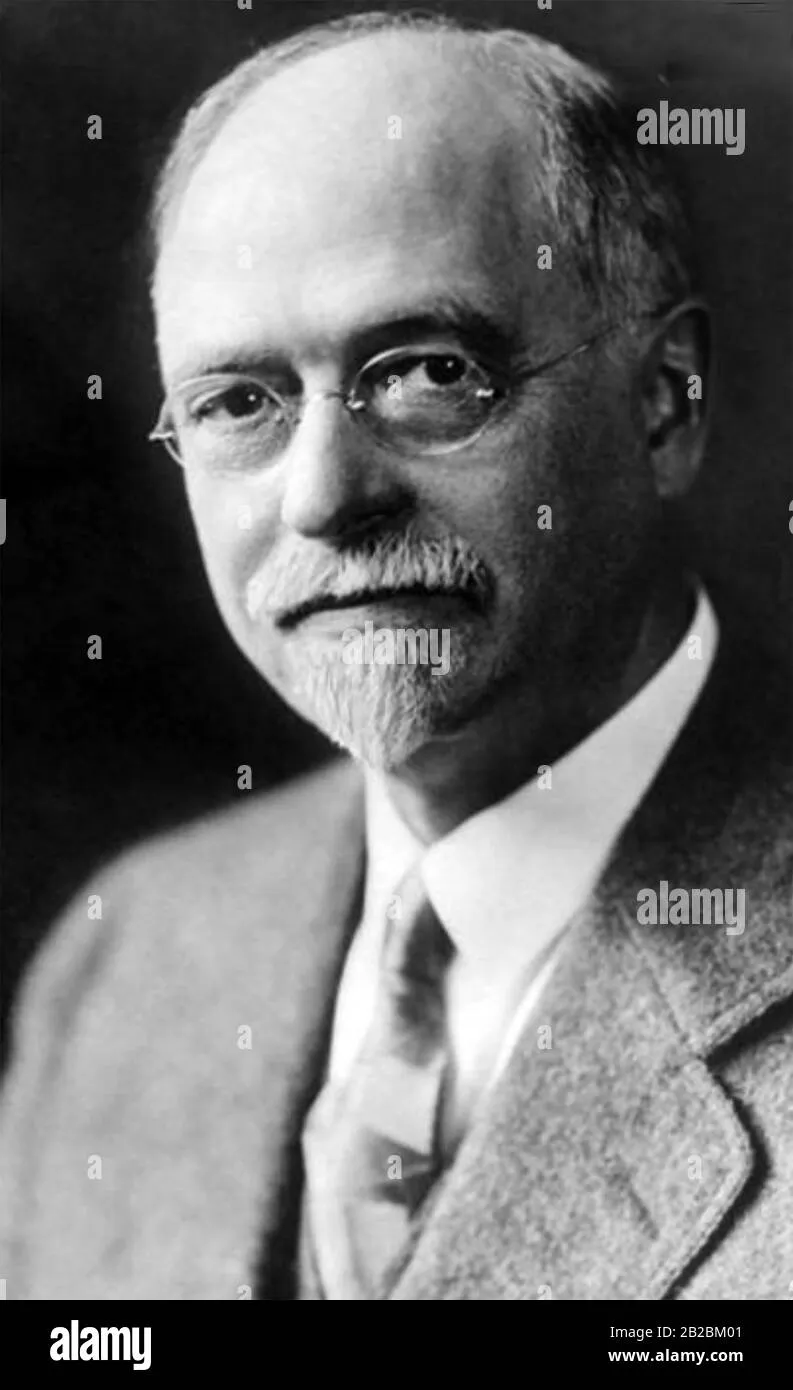 Photo: Irving Fisher, via c8.alamy.com
Several American communities adopted versions of this system. The town of Woergl in Austria — not an American example but one that attracted significant American attention — achieved a local economic revival sufficiently dramatic that economists and journalists traveled to document it. Fisher became an enthusiastic advocate for stamp scrip at the national level, corresponding with members of Congress and eventually with the Roosevelt administration.
The Roosevelt administration's response was to prohibit the further issuance of emergency currencies by non-federal entities. The legal authority for this prohibition was not entirely clear, but the political authority was unambiguous. The New Deal's monetary strategy depended on centralized control of the money supply, and locally issued currencies — however successful — represented a structural challenge to that centralization that no administration could comfortably tolerate.
What Was Actually Being Protected
The federal government's objection to local scrip was framed in terms of economic stability and the dangers of monetary fragmentation. These concerns were not entirely without merit. A truly balkanized currency system would have created real transaction costs and real barriers to interstate commerce. But the vigor of the response — and its timing, which in several cases preceded any evidence of instability in the scrip systems being suppressed — suggests that something beyond economic efficiency was at stake.
What was being protected was the psychology of monetary authority. Central banking, in the modern form that the United States had only recently consolidated through the Federal Reserve Act of 1913, depends not merely on the technical capacity to manage the money supply but on the universal acceptance that managing the money supply is the government's exclusive prerogative. A functioning local currency does not merely create a parallel medium of exchange. It demonstrates, in the most concrete possible terms, that the federal government's monetary monopoly is contingent rather than natural — that it rests on collective agreement rather than physical necessity.
This is a demonstration that no central bank can afford to allow to run its full course. Not because the experiment would necessarily fail, but because it might succeed.
The Historical Pattern Behind the Episode
The suppression of local scrip fits a pattern that recurs throughout the history of monetary systems with enough regularity to qualify as a behavioral constant. Monetary authority has never been maintained primarily through economic superiority. It has been maintained through the aggressive management of legitimacy — the cultivation of the belief that authorized currency is categorically different from unauthorized currency, regardless of their functional equivalence.
Rome debased its coinage for centuries while prosecuting counterfeiters with extreme severity. The distinction between official debasement and private counterfeiting was, in economic terms, often negligible. In political terms, it was everything. The sovereign's face on the coin was not a guarantee of value. It was a declaration of monopoly.
The Depression-era scrip experiments offered Americans a brief, accidental glimpse behind the curtain of that monopoly. What they saw was that money worked when people decided it worked, and that the federal government's role in that decision was important but not irreplaceable. This was precisely the lesson that could not be allowed to consolidate into public understanding.
Tenino's wooden dollars are museum pieces now, collectibles sold to tourists as curiosities from a desperate era. The lesson they contain — about the nature of monetary authority, the psychology of legitimacy, and the distance between what institutions claim to protect and what they are actually protecting — is not a curiosity. It is a precise account of how power maintains itself, written in spruce and ink by a small Washington town that simply needed to buy groceries.
The ledger does not forget these entries, even when the official record prefers not to highlight them.