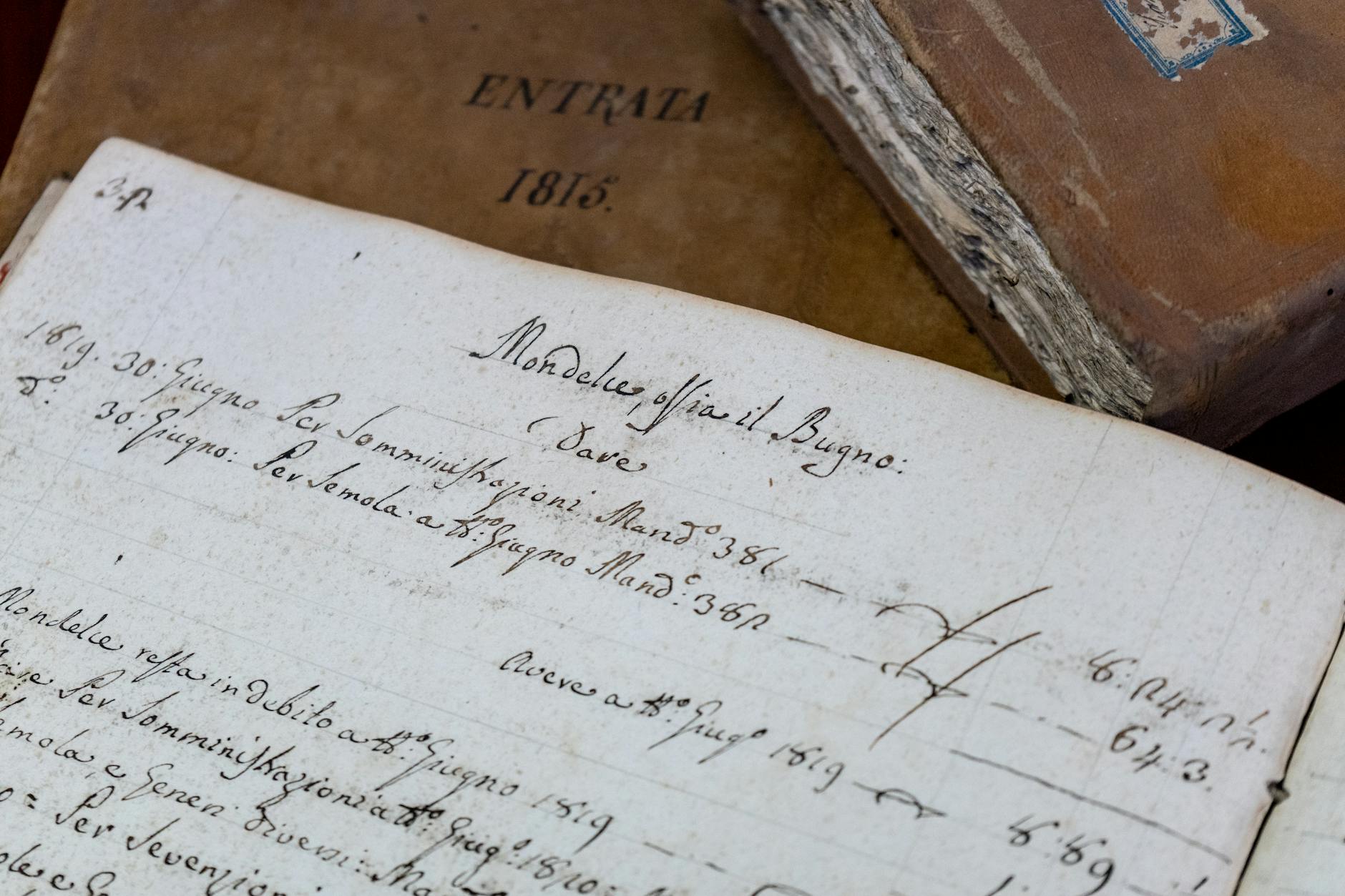
The Old Ledger History is the longest psychology study ever run.

The Old Ledger

History is the longest psychology study ever run.

Latest Articles

The Invisible Hand Has a Long Memory: Three Centuries of American Business Decisions Driven by Personal Score-Settling
Technology & Business History

The Invisible Hand Has a Long Memory: Three Centuries of American Business Decisions Driven by Personal Score-Settling

Business school curricula favor clean narratives of strategy, market forces, and rational capital allocation. The actual ledger books, court filings, and private correspondence of American commercial history tell a considerably messier story — one in which wounded pride, personal rivalry, and the specific desire to humiliate a named individual have repeatedly reshaped entire industries. Human psychology has never been an externality. In American business, it has frequently been the primary driver.


American Rage Has No Origin Story: Five Moments That Prove Political Fury Is a Feature, Not a Bug
Technology & Business History

American Rage Has No Origin Story: Five Moments That Prove Political Fury Is a Feature, Not a Bug

Today's headlines describe American political culture as uniquely fractured, historically unprecedented, and dangerously new. The historical record disagrees — loudly, and with a cane. From a sitting Vice President committing murder to a congressman beating a senator unconscious on the Senate floor, the United States has always operated at a temperature that its citizens perpetually mistake for a fever.

The Numbers Never Lie, But the People Behind Them Always Try: What Historical Account Books Reveal About Financial Self-Deception
Technology & Business History

The Numbers Never Lie, But the People Behind Them Always Try: What Historical Account Books Reveal About Financial Self-Deception

Across five centuries of account books, merchant ledgers, and colonial debt records, a pattern emerges that no amount of financial literacy education has managed to interrupt: human beings are constitutionally inclined to believe their financial situation is better than their own numbers demonstrate. The gap between what people say they do with money and what the ledger shows they actually do is not a modern phenomenon. It is a hardwired feature of the species.

Tulips, Tickets, and the Timeless Art of Separating Fools from Their Money
Technology & Business History

Tulips, Tickets, and the Timeless Art of Separating Fools from Their Money

The mechanics of the South Sea Bubble of 1720 are so familiar they read like a modern SEC enforcement action — paid promoters, insider trading, and retail investors who leveraged everything they owned on a story that was never true. The scheme did not emerge from a uniquely corrupt era. It emerged from human psychology, which has not issued a single patch in three hundred years.

Six Moves, Four Centuries: The Confidence Trick Has Never Needed an Update
Technology & Business History

Six Moves, Four Centuries: The Confidence Trick Has Never Needed an Update

From colonial land speculators to Gilded Age bucket shops to the phishing email in your spam folder this morning, the successful confidence scheme has always operated on the same six psychological levers. The hardware being exploited is the human brain, and it has not changed. Neither has the playbook — which means anyone willing to study the historical record is already holding the best fraud prevention manual ever written.

The Perennial Alarm: Five Centuries of Adults Convinced the Young Were Going to Ruin Everything
Technology & Business History

The Perennial Alarm: Five Centuries of Adults Convinced the Young Were Going to Ruin Everything

For as long as there has been a recognizable American culture, there has been a generation of adults certain that some new influence was poisoning its children. The objects of alarm have changed with each era — novels, jazz, comic books, video games, smartphones — but the psychological structure of the panic has remained constant. The history is unambiguous: the panic is almost never really about the children.

Panic Is the Product: What the Bank Runs of 1933 Teach Us About Every Viral Crisis Since
Technology & Business History

Panic Is the Product: What the Bank Runs of 1933 Teach Us About Every Viral Crisis Since

The Depression-era bank run did not require a broken financial system to succeed — it required only a rumor and a crowd. Nearly a century later, the mechanism is identical, and the only meaningful difference is the speed at which fear now travels. Understanding what actually stopped the panics of 1933 turns out to be far more instructive than any content moderation policy written since.

The Founders Built a Republic Designed to Restrain You — And They Said So Explicitly
Technology & Business History

The Founders Built a Republic Designed to Restrain You — And They Said So Explicitly

James Madison, Alexander Hamilton, and their colleagues at Philadelphia did not design the Constitution as a celebration of popular sovereignty. They designed it as a carefully engineered brake on it — and they left extensive documentation explaining exactly why. Understanding that anxiety does not diminish the American founding. It clarifies every argument the country has been having ever since.

Two Thousand Years and the Same Argument: What Rome's Immigration Debates Tell Us About Ourselves
Technology & Business History

Two Thousand Years and the Same Argument: What Rome's Immigration Debates Tell Us About Ourselves

The Roman Senate spent decades arguing about who deserved citizenship, who posed a cultural threat, and who was stealing Roman livelihoods — and the emotional logic of those debates is functionally indistinguishable from what you heard on cable news last Tuesday. History is not repeating itself. It never stopped.

The Panic Playbook: Seven Financial Collapses That Ran the Same Play From the Same Script
Technology & Business History

The Panic Playbook: Seven Financial Collapses That Ran the Same Play From the Same Script

From Dutch tulip bulbs to mortgage-backed securities, financial collapses across four centuries have followed a pattern so consistent it reads less like a series of accidents and more like a ritual. The names change. The mechanism does not. Wall Street is not failing to learn from history — it is constitutionally incapable of doing so.

The Rise, Fall, and Reinvention of Digg: A Story of Silicon Valley's Most Dramatic Rivalry
Technology & Business History

The Rise, Fall, and Reinvention of Digg: A Story of Silicon Valley's Most Dramatic Rivalry

Few stories in the early history of the social internet are as compelling — or as cautionary — as that of Digg, the news aggregation platform that once stood at the pinnacle of web culture before losing a bitter rivalry with Reddit. From its founding in 2004 to its multiple reinventions, Digg's trajectory offers a masterclass in how quickly fortunes can shift in the technology industry.