The Old Ledger History is the longest psychology study ever run.

The Old Ledger

History is the longest psychology study ever run.

Latest Articles

Twice a Year Forever: The Unstoppable Clock Change That Logic Cannot Kill
Technology & Business History

Twice a Year Forever: The Unstoppable Clock Change That Logic Cannot Kill

Daylight Saving Time has survived a century of evidence against its usefulness, three world wars, multiple congressional hearings, and unanimous expert opposition. Its persistence reveals how institutional momentum trumps rational analysis once enough systems organize around an arbitrary practice.

The 65-Year Deception: How Prussia's Budget Trick Became America's Retirement Religion
Business History

The 65-Year Deception: How Prussia's Budget Trick Became America's Retirement Religion

Otto von Bismarck set retirement at 65 in a country where most people died by 45, creating a social program that almost no one would ever use. American workers now organize their entire lives around this arbitrary number, defending it with religious fervor despite its origins as fiscal manipulation.

When Spite Gave America Saturday: The Retail War That Accidentally Created Your Weekend
Business History

When Spite Gave America Saturday: The Retail War That Accidentally Created Your Weekend

The modern weekend wasn't born from worker solidarity or progressive idealism. It emerged from Henry Ford's calculated attempt to undermine Jewish-owned department stores and create customers from his own workforce, proving once again that personal vendettas often architect the structures that govern ordinary life.

When Desperate Times Demand Untested Leaders: How Crisis Transforms Improvisation Into Sacred Doctrine
Business History

When Desperate Times Demand Untested Leaders: How Crisis Transforms Improvisation Into Sacred Doctrine

The New Deal succeeded not because its architects knew what they were doing, but because Americans needed to believe someone did. This pattern of crisis-driven faith in authority has shaped every major government intervention since 1933.

When One Man's Paranoia Paved America: The Psychology Behind Suburban Sprawl
Business History

When One Man's Paranoia Paved America: The Psychology Behind Suburban Sprawl

Henry Ford's deep-seated fear of urban corruption and Eastern financial control didn't just influence his business decisions — it fundamentally reshaped how Americans live, work, and move. The suburban landscape that defines modern America emerged not from careful planning, but from one industrialist's psychological aversion to city life.

When Friendship Dies, Markets Adapt: The Gould-Fisk Split That Wrote Wall Street's Rulebook
Business History

When Friendship Dies, Markets Adapt: The Gould-Fisk Split That Wrote Wall Street's Rulebook

The spectacular collapse of Jay Gould and James Fisk's partnership after the 1869 gold panic didn't just end a friendship—it forced American finance to confront the dangerous psychology of unchecked personal relationships in high-stakes trading. The regulatory framework that emerged from their mutual destruction still protects investors today, proving that our market safeguards were born not from wisdom, but from wounded pride.

When Pride Clipped Wings: The Patent War That Left America Flying Second Class
Technology & Business History

When Pride Clipped Wings: The Patent War That Left America Flying Second Class

The Wright Brothers' decade-long legal crusade against competitor Glenn Curtiss reveals how personal vendettas masquerading as business principles can paralyze entire industries. Their refusal to license flight patents left America's aviation sector grounded while European manufacturers soared ahead.

Steel, Spite, and the American Century: How One Man's Need for Vindication Forged a Nation's Industrial Backbone
Business History

Steel, Spite, and the American Century: How One Man's Need for Vindication Forged a Nation's Industrial Backbone

Andrew Carnegie's transformation from Scottish mill boy to American steel magnate wasn't driven by business acumen alone—it was fueled by decades of accumulated slights and a burning need to prove wrong every person who had ever underestimated him. The infrastructure that powered America's rise was built on something far more primal than market forces: the psychology of revenge.

When Personal Hatred Becomes National Policy: The Jefferson-Hamilton Feud That Still Governs Your Bank Account
Business History

When Personal Hatred Becomes National Policy: The Jefferson-Hamilton Feud That Still Governs Your Bank Account

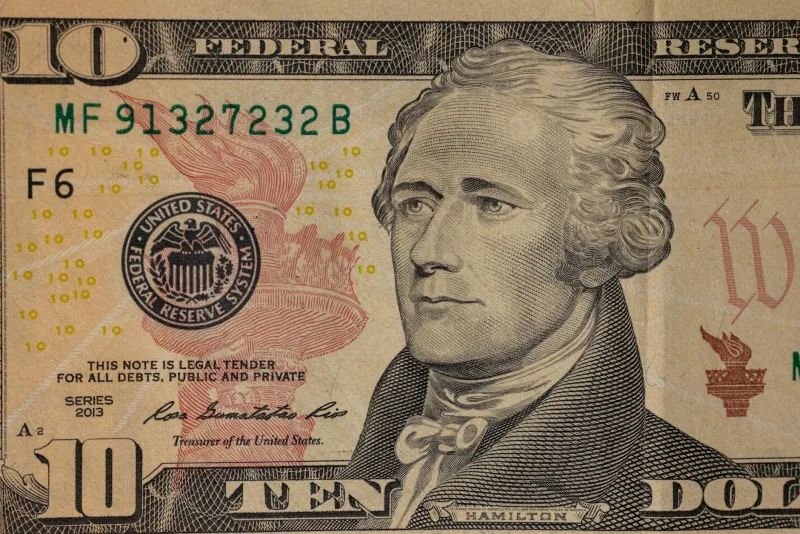
The bitter personal animosity between Thomas Jefferson and Alexander Hamilton didn't end with Hamilton's death in 1804—it crystallized into competing economic philosophies that continue to shape American financial policy today. What began as wounded pride between two cabinet members became the ideological foundation for debates over federal banking, government spending, and economic centralization that persist in modern politics.

The Common Enemy Doctrine: Why American Unity Always Requires a Third Party to Despise
Business History

The Common Enemy Doctrine: Why American Unity Always Requires a Third Party to Despise

Throughout American history, political cooperation has emerged not from mutual respect but from mutual hatred of someone else. From wartime coalitions to bipartisan legislation, the pattern remains consistent: politicians who publicly loathe each other discover sudden unity only when faced with a shared threat they despise even more.

Iron Rails and Wounded Pride: The Personal Feuds That Forged America's First Transcontinental Railroad
Business History

Iron Rails and Wounded Pride: The Personal Feuds That Forged America's First Transcontinental Railroad

The transcontinental railroad, celebrated as America's greatest engineering triumph, was built as much on personal vendettas as steel and steam. The psychological drivers behind this monumental project reveal how individual grudges shaped national infrastructure.

When Certainty Kills: How Medical Hubris Has Claimed More Lives Than Disease
Business History

When Certainty Kills: How Medical Hubris Has Claimed More Lives Than Disease

For five centuries, medicine's greatest threat hasn't been ignorance—it's been the dangerous confidence of healers who refused to admit what they didn't know. From the bloodletting that killed George Washington to the patent medicine empires built on poison, the human need to project expertise has consistently proven more lethal than the diseases it claimed to cure.

When Fortune's Guardians Forecast Doom: The Elite's Century-Long Record of Predicting Capitalism's Death
Business History

When Fortune's Guardians Forecast Doom: The Elite's Century-Long Record of Predicting Capitalism's Death

America's wealthiest business leaders have spent over a century predicting the imminent collapse of the economic system that made them rich. Their forecasts reveal more about the psychology of protecting accumulated wealth than the actual resilience of markets.

The Politics of Fear: Why American Leaders Have Always Needed a Monster Under the Bed
Business History

The Politics of Fear: Why American Leaders Have Always Needed a Monster Under the Bed

From Alexander Hamilton's warnings about Jefferson's radicalism to modern political campaigns, American politicians have consistently discovered that voters respond more reliably to threats than promises. Three centuries of election records reveal that successful political messaging follows a predictable pattern: identify the enemy, amplify the danger, position yourself as the only barrier between chaos and order.

When Wounded Pride Wrote the Law: How Personal Animosity Forged America's Blueprint
Technology & Business History

When Wounded Pride Wrote the Law: How Personal Animosity Forged America's Blueprint

The Constitution's most enduring provisions weren't born from philosophical ideals alone—they emerged from a room full of men nursing professional grudges and personal slights. Understanding these human motivations reveals why certain structural features of American government persist unchanged after two and a half centuries.

The Gentleman of Leisure: What Happened to the Men Who Finally Stopped Working
Technology & Business History

The Gentleman of Leisure: What Happened to the Men Who Finally Stopped Working

The dream of stepping away from commerce and living without productive obligation is far older than any modern retirement movement. Wealthy merchants, colonial planters, and Gilded Age industrialists pursued it across four centuries of American history, and the record of what became of them is remarkably consistent. The fantasy is ancient. So, unfortunately, is the outcome.

Prove It or Be Suspect: Five Times America Demanded Loyalty and Got Paranoia Instead
Technology & Business History

Prove It or Be Suspect: Five Times America Demanded Loyalty and Got Paranoia Instead

Throughout American history, the demand that citizens demonstrate their patriotism has reliably produced the same outcome: not security, but suspicion turned inward. The mechanism is psychological, the results are documented, and the cycle has never once broken on its own. Every generation that reaches for the loyalty oath believes it has finally encountered a threat serious enough to justify it.

Confidently Wrong: A Reading of Official Expert Consensus That History Eventually Corrected
Technology & Business History

Confidently Wrong: A Reading of Official Expert Consensus That History Eventually Corrected

The history of credentialed expertise is not a story of steady progress toward truth. It is a story of confident institutions, populated by trained and often brilliant people, periodically discovering that the consensus they had built and defended was catastrophically mistaken. Understanding that pattern is not an argument against expertise. It is an argument for reading the record before deciding how much deference any particular consensus deserves.

The Oldest Trick in the Record: Five Misinformation Campaigns That Prove Manufactured Lies Predate Every Platform Ever Blamed for Them
Technology & Business History

The Oldest Trick in the Record: Five Misinformation Campaigns That Prove Manufactured Lies Predate Every Platform Ever Blamed for Them

Every era arrives at the same alarmed conclusion: that it has been uniquely afflicted by an epidemic of falsehood, that the mechanisms of deception are new, and that the solution lies in controlling whatever medium currently carries the lies. Every era is wrong on all three counts. The historical record offers five specific campaigns of manufactured narrative — spanning centuries and continents — that demonstrate with uncomfortable precision that the architecture of mass deception has never required updating. The platform changes. The psychology does not.

A Republic, Not a Democracy: Why the Men Who Built This Country Didn't Trust the People Who Would Live In It
Technology & Business History

A Republic, Not a Democracy: Why the Men Who Built This Country Didn't Trust the People Who Would Live In It

The Constitutional Convention of 1787 was not a celebration of popular sovereignty — it was, in significant measure, a crisis management exercise conducted by men who had read enough history to be genuinely frightened of what unchecked majorities do. Their private letters and convention notes reveal a psychology of governance rooted not in cynicism but in a clear-eyed study of every republic that had risen and collapsed before them. The architecture they built was designed to protect the country from its own citizens.