The Martyred Inventor: Why Americans Need Their Geniuses Robbed
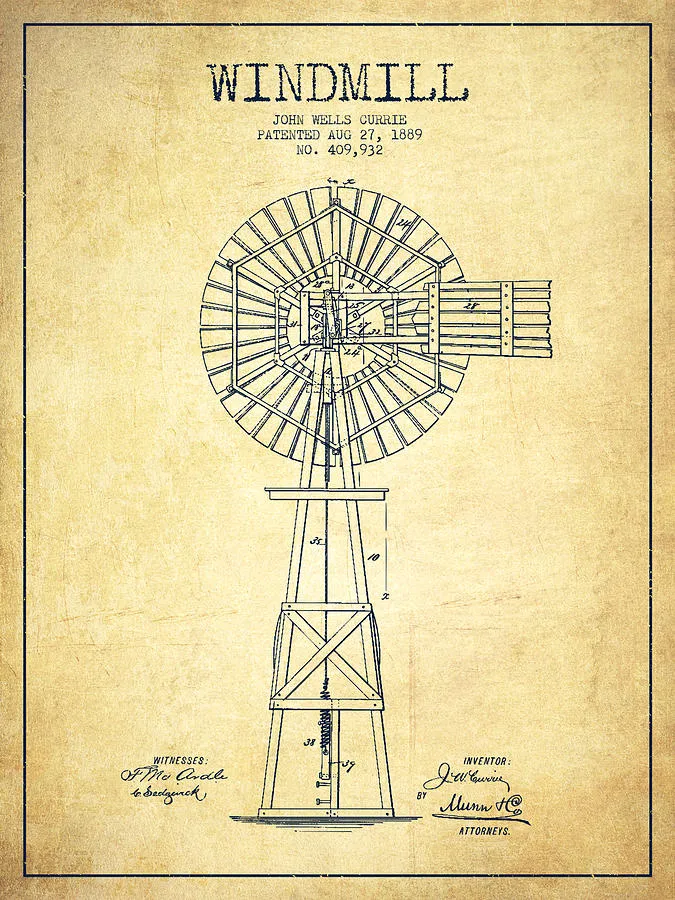
Photo: John Mills Currie, Public domain, via Wikimedia Commons
There is a story Americans have been telling themselves for roughly two hundred and fifty years, and it goes like this: a solitary genius, working against indifference or active hostility, produces something transformative. Powerful interests — corporations, rivals, the government, some combination of all three — move to claim or suppress or steal the invention. The genius dies unrecognized, or impoverished, or bitter. History eventually corrects the record. The genius is vindicated. The powerful interests are condemned.
This story is sometimes true. That is the source of its authority and, in equal measure, the source of its danger.
The Template and Its Origins
Eli Whitney is the conventional starting point for this narrative, and the conventional telling is not entirely inaccurate. Whitney invented the cotton gin in 1793, secured a patent, and then spent the better part of a decade in litigation attempting to enforce it — litigation he largely lost, against Southern planters who copied his design, argued that his patent was invalid, and possessed sufficient political influence to ensure that the courts of Southern states were not inclined to rule against them. Whitney made relatively little money from the cotton gin. He made his actual fortune manufacturing muskets under a government contract.
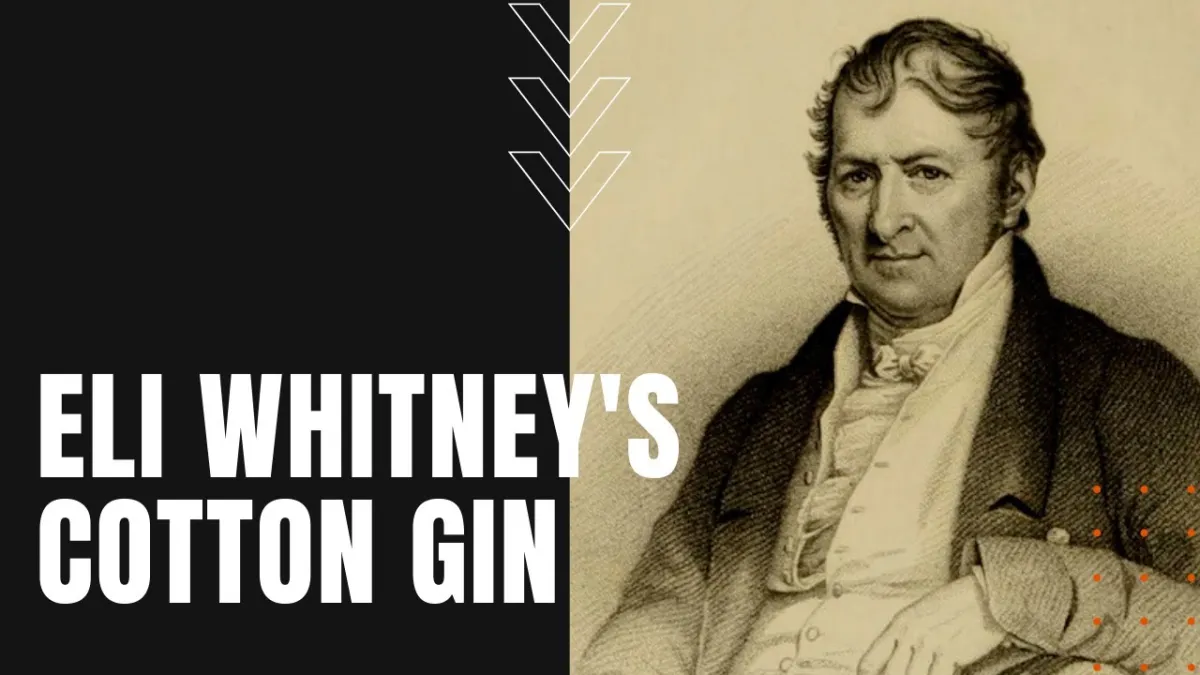 Photo: Eli Whitney, via i.ytimg.com
The standard recounting of Whitney's story ends with the patent litigation and the injustice. It rarely continues to the musket contracts, which complicates the martyrdom somewhat. This selective editing is not dishonest, exactly. It is something more interesting: it is evidence that the narrative has requirements, and facts that do not serve those requirements are quietly omitted without anyone deciding to omit them.
The requirements of the martyred-inventor narrative are specific. The genius must be solitary — collaborative invention does not produce the same emotional resonance. The theft must be perpetrated by an identifiable powerful party, preferably one that can be understood as representing systemic corruption rather than individual bad behavior. The genius must have suffered materially and visibly. And the vindication must be posthumous, or at least delayed long enough to constitute a tragedy rather than merely a setback.
Tesla and the Perfection of the Form
No figure in American technological history has been more thoroughly processed through this narrative template than Nikola Tesla, and the processing reveals the template's mechanics with unusual clarity.
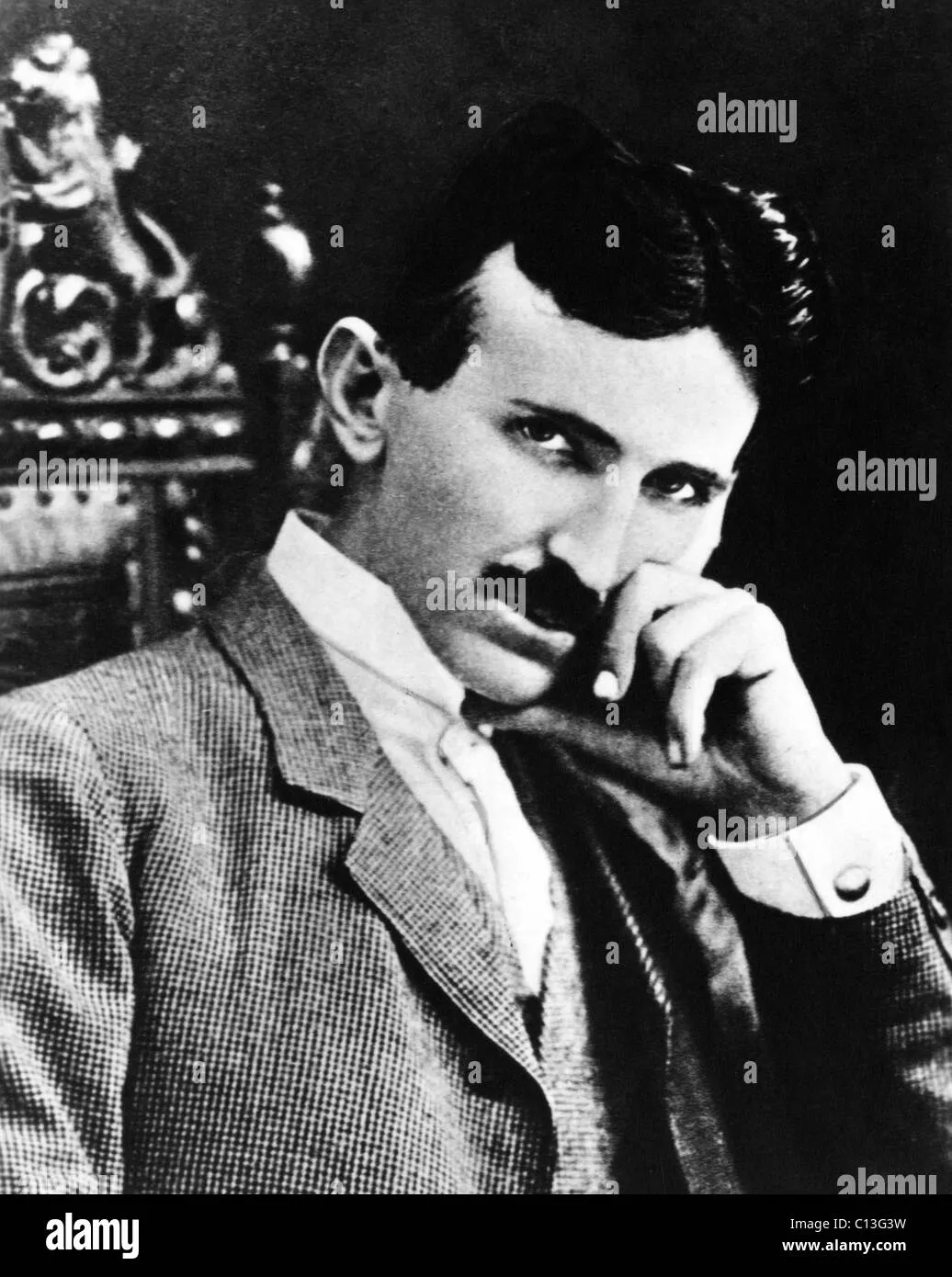 Photo: Nikola Tesla, via c8.alamy.com
Tesla's genuine accomplishments were extraordinary. His work on alternating current systems was foundational. His conflicts with Thomas Edison were real, and Edison's treatment of him was, by most accounts, not honorable. His later financial difficulties were genuine. He died in a New York hotel room in 1943, largely forgotten by the general public, having assigned most of his patents over the years to various corporate interests that profited from them more than he did.
All of this is true. What is also true — and what the standard Tesla narrative handles with considerable awkwardness — is that Tesla's later career included decades of increasingly grandiose claims that were never demonstrated, investments of time and capital in projects that produced no working results, and a series of financial decisions that a less romantically appealing figure would be described as having made poorly. The Wardenclyffe Tower project, often cited as evidence of visionary suppression by J.P. Morgan, was also a project that Tesla promised would do things it showed no evidence of being capable of doing.
This is not a verdict on Tesla's genius. It is an observation about the narrative. The martyred-inventor template requires that every failure be attributable to external suppression, because the alternative — that even genuine geniuses sometimes pursue dead ends — introduces a complexity that the story cannot accommodate without losing its emotional force.
When the Template Escapes Its Origins
The genuinely consequential problem with the martyred-inventor narrative is not what it does to the memory of Whitney or Tesla. It is what it does to the evaluation of people who invoke the template without having earned it.
American patent litigation history is filled with claimants who adopted the vocabulary of suppressed genius — the lone visionary against the corporate machine — while pursuing claims of questionable merit. The emotional resonance of the template is available to anyone willing to use it, and it does not require a valid underlying claim. A person who lost a legitimate competitive dispute, who was outmaneuvered in a fair market, or who simply developed a product that the public did not want, can adopt the martyred-inventor posture and find a receptive audience.
This is not because Americans are credulous. It is because the template maps onto something Americans believe at a structural level about how power works. The conviction that meritocracy is perpetually being subverted by entrenched interests is not paranoid fantasy — it has enough historical support to be a reasonable prior. The problem is that a reasonable prior, applied without discrimination, becomes a mechanism for misattributing every competitive loss to corruption.
What the Belief Reveals
The persistence of the martyred-inventor narrative across two and a half centuries of American commercial and technological history reveals something specific about the psychological contract Americans have with capitalism.
The official ideology of American economic life holds that markets reward genuine merit. This is the promise. The martyred-inventor narrative is the culture's way of processing the abundant evidence that markets do not always reward genuine merit — that timing, capital, social connections, and the capacity for aggressive litigation matter enormously, sometimes more than the quality of the underlying invention. Rather than revising the promise, the culture has developed a narrative that preserves it: when merit goes unrewarded, it is because the market was corrupted. The market, properly functioning, would have done right. It was the powerful interests that failed the genius, not the system.
This is a psychologically elegant solution. It allows the promise of meritocracy to remain intact while accounting for all the evidence against it. It also, as a side effect, produces a culture that is extraordinarily sympathetic to claims of victimhood from inventors and entrepreneurs, regardless of whether those claims are well-founded.
The Ledger's Honest Entry
The historical record, examined without sentiment, shows a more complicated picture than the narrative allows. Some genuinely important inventors were robbed. Some were not robbed but lost fair competitions and found the martyrdom narrative more comfortable than the alternative explanation. Some were partially robbed and partially responsible for their own misfortunes in proportions that resist clean assignment.
What the record does not show is a consistent pattern of genius suppressed by power. It shows a consistent pattern of genius and power in negotiation — sometimes corrupt, sometimes fair, usually somewhere between the two — producing outcomes that are messy and contingent rather than morally legible.
The martyred-inventor narrative survives not because it is accurate but because it is necessary. It does the psychological work of preserving the meritocratic promise in the face of a market that delivers mixed verdicts. Americans have been running this story for as long as they have been running the market, and the two are not unrelated. You cannot simultaneously believe that genius deserves reward and observe that genius is frequently unrewarded, without developing some story that accounts for the gap. The martyred inventor is that story. History provided the first few genuine examples. Human psychology supplied the rest.