America's Most Powerful Survey: How Counting Citizens Became the Art of Controlling Them

The Innocent Beginning
The Constitution's requirement for a decennial census seemed straightforward: count people, allocate congressional seats, distribute federal resources. The Founders envisioned a simple headcount that would ensure fair representation in the House of Representatives. What they created instead was America's most powerful tool for defining who counts as human, who deserves representation, and who controls political power.
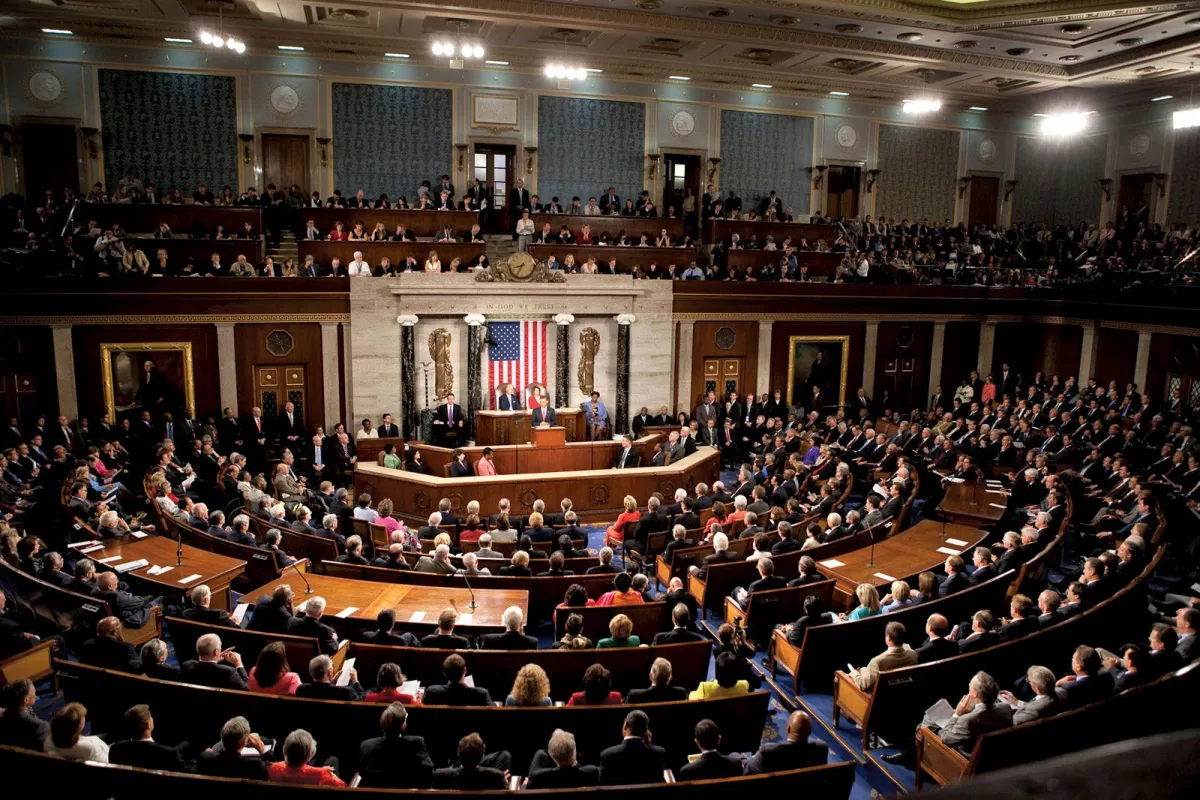 Photo: House of Representatives, via cdn.britannica.com
From the very first census in 1790, the act of counting Americans became an act of categorizing them—and those categories became the foundation for every subsequent battle over American identity, economics, and political control.
1790: The Original Sin of Classification
The first U.S. Census established a psychological pattern that persists today: the government's power to define human categories creates the categories themselves. The 1790 census didn't simply count people—it invented racial classifications that had no scientific basis but enormous political consequences.
The census created five categories: "Free white males of 16 years and upward," "Free white males under 16 years," "Free white females," "All other free persons," and "Slaves." These weren't natural distinctions—they were political constructions designed to solve the constitutional problem of slave state representation while maintaining white supremacy.
The "three-fifths compromise" required counting enslaved people as partial humans for congressional apportionment while denying them any political rights. This mathematical fiction—treating human beings as fractions—established the census as a tool for encoding inequality into democratic representation.
1870: The Reconstruction Reckoning
The 1870 census marked the first attempt to count formerly enslaved people as full citizens, but it revealed how deeply racial categories had become embedded in American political psychology. The census expanded racial classifications to include "White," "Black," "Mulatto," "Chinese," and "Indian," creating new categories that reflected post-Civil War anxieties about racial mixing and political power.
These classifications weren't scientific—they were political responses to Reconstruction-era fears about Black political participation. The "mulatto" category, for instance, existed solely to maintain white political supremacy by preventing mixed-race individuals from claiming full citizenship rights.
The psychological impact was profound: by creating official government categories for racial identity, the census transformed fluid social relationships into fixed political classifications that determined voting rights, economic opportunities, and social status.
1890: The Vanishing Frontier and Manufactured Nostalgia
The 1890 census famously declared the American frontier "closed," a determination that had nothing to do with geography and everything to do with national psychology. The Census Bureau's announcement that continuous frontier settlement had ended triggered a national identity crisis that reshaped American foreign policy, immigration attitudes, and economic development for the next century.
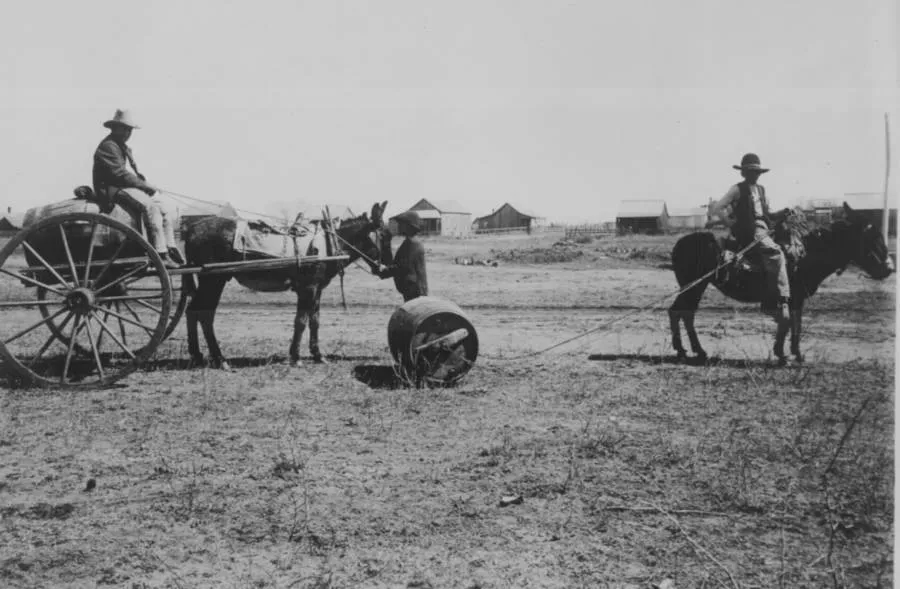 Photo: American frontier, via allthatsinteresting.com
This demonstrates the census's power to create reality through measurement. By declaring the frontier closed, the census didn't describe a natural condition—it manufactured a national narrative that justified overseas expansion, immigration restriction, and the romanticization of westward settlement that still dominates American mythology.
The psychological impact was immediate: Americans began viewing themselves as a "completed" nation rather than an expanding one, fundamentally altering national self-perception and political priorities.
1940: The Security State's Database
The 1940 census marked the first time the federal government used census data for individual targeting rather than aggregate analysis. During World War II, the Census Bureau provided the War Department with detailed information about Japanese Americans, enabling their systematic internment.
This wasn't an abuse of census data—it was the logical extension of the census's original function as a tool of government control. By creating detailed demographic profiles of American communities, the census provided the infrastructure for surveillance and persecution that the government activated during wartime.
The psychological precedent was established: census participation, presented as civic duty, could become the foundation for government persecution. This created a permanent tension between census cooperation and personal security that persists in contemporary immigration debates.
2000: The Multiracial Revolution
The 2000 census allowed Americans to select multiple racial categories for the first time, seemingly representing progress toward more fluid racial identity. In reality, this change reflected the government's response to demographic pressure from mixed-race advocacy groups who threatened to boycott the census entirely.
The "mark one or more" option didn't eliminate racial categorization—it multiplied it. The Census Bureau now recognizes 63 possible racial combinations, each carrying different implications for federal program eligibility, political representation, and social classification.
This reveals the census's fundamental paradox: attempts to make racial categories more inclusive inevitably make them more complex and politically significant. The government's power to define identity categories ensures that those categories become tools for distributing political power and economic resources.
The Modern Control Mechanism
Today's census operates as a sophisticated instrument of political control disguised as neutral data collection. Every question—about income, housing, family structure, employment, and education—generates information that determines federal funding allocation, congressional redistricting, and business development patterns.
The psychological mechanism remains identical to 1790: by requiring Americans to classify themselves according to government categories, the census transforms individual identity into political data. These classifications then become the basis for group-based political representation, creating incentives for communities to organize around census categories rather than shared interests.
The Participation Paradox
The census creates a psychological double-bind that reveals the fundamental tension in American democracy. Citizens must participate in their own categorization to receive political representation, but that participation enables government surveillance and potential persecution.
This paradox intensified during the Trump administration's attempt to add a citizenship question to the 2020 census. The question wasn't about gathering information—it was about using the census as an immigration enforcement tool, demonstrating how counting people inevitably becomes a method for controlling them.
The Unchanging Psychology
Across 230 years, the census has consistently revealed the same psychological truth: human beings will organize politically around whatever categories the government creates to count them. The categories themselves become sources of identity, political mobilization, and resource competition.
This explains why census battles are always fierce political contests. They're not really about counting people—they're about defining the categories that will determine political power for the next decade. The groups that control census categories control the framework for American political competition.
The census remains America's most powerful survey not because of its statistical accuracy, but because of its unique authority to transform social relationships into political classifications. Every decade, Americans participate in their own categorization, creating the data infrastructure that will govern their political representation until the next count begins.