
The War Measure That Wouldn't End
Woodrow Wilson signed the Standard Time Act in March 1918, imposing Daylight Saving Time as a wartime conservation measure designed to reduce coal consumption by maximizing daylight hours during peak activity periods. The policy was sold as a temporary sacrifice for national security—a minor inconvenience that would help win the war and then disappear with the return of peace.
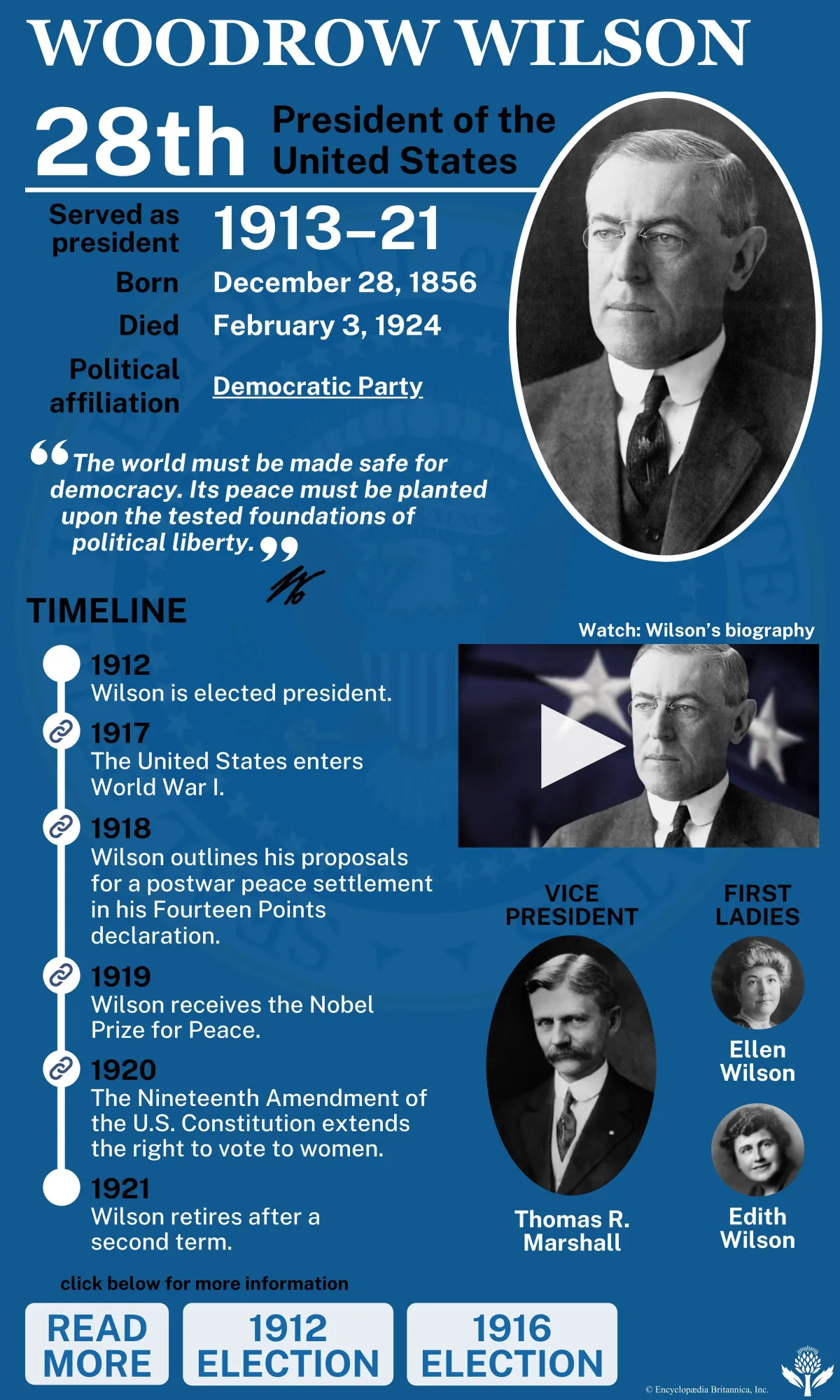 Photo: Woodrow Wilson, via cdn.britannica.com
The temporary measure lasted exactly seven months. Congress repealed federal Daylight Saving Time in August 1919, responding to widespread complaints from farmers, railroad companies, and workers who found the clock changes disruptive to agricultural schedules and industrial operations. The swift repeal seemed to confirm that the policy had served its emergency purpose and would now fade into historical memory like other wartime expedients.
Except it didn't disappear. Instead, the federal repeal created a patchwork of local implementations that proved even more chaotic than the original national system. Some cities maintained Daylight Saving Time year-round, others observed it seasonally, and still others abandoned it entirely. The resulting confusion forced Congress to reconsider federal standardization, beginning a cycle of implementation, repeal, and re-implementation that continues today.
The Evidence That Never Mattered
By the 1940s, studies were already questioning whether Daylight Saving Time achieved its stated energy conservation goals. Research conducted during World War II suggested that any electricity savings from reduced evening lighting were offset by increased air conditioning use during extended daylight hours. The net energy benefit appeared negligible at best, and possibly negative in regions with hot climates.
Subsequent decades produced an overwhelming body of evidence against the policy's effectiveness. The 1970s energy crisis prompted comprehensive federal studies that found minimal energy savings from clock changes. The 2005 Energy Policy Act, which extended Daylight Saving Time by four weeks, was followed by Department of Energy analysis showing virtually no measurable conservation benefit from the expansion.
Meanwhile, research accumulated documenting the policy's costs. Medical studies linked the biannual time changes to increased heart attacks, strokes, and automobile accidents in the days following each transition. Economic analyses calculated billions of dollars in productivity losses from disrupted sleep schedules and coordination difficulties across time zone boundaries.
The Institutional Web of Dependency
Despite mounting evidence of its ineffectiveness and growing documentation of its costs, Daylight Saving Time proved remarkably resistant to elimination. The reason wasn't public support—polls consistently showed majority opposition to the practice. Instead, the policy's survival reflected the complex web of systems that had organized themselves around its existence.
Airline schedules, television programming, agricultural supply chains, and financial markets had all adapted to accommodate biannual clock changes. Each industry developed specialized procedures and software systems to handle time transitions, creating constituencies with technical rather than ideological investments in the status quo. Eliminating Daylight Saving Time would require coordinated changes across thousands of interconnected systems—a logistical challenge that often seemed more daunting than simply maintaining the existing arrangement.
The technology sector's response to time changes illustrates this dynamic perfectly. Rather than lobbying for elimination of a practice that created significant programming complications, software companies developed increasingly sophisticated tools for managing time zone transitions. Their investment in technical solutions to handle Daylight Saving Time became an argument for preserving the system that justified those investments.
The Psychology of Inherited Absurdity
The persistence of Daylight Saving Time reveals something fundamental about how societies handle inherited policies that no longer serve their original purposes. Once a practice becomes embedded in institutional routines, its continuation requires no active justification—only its elimination requires proof of necessity.
This reversal of the burden of evidence explains why so many obviously problematic policies survive long past their usefulness. Defenders of Daylight Saving Time don't need to prove that clock changes provide net benefits; they only need to highlight the disruption that would accompany any change to existing arrangements. The status quo enjoys a presumption of legitimacy that reformers must overcome with overwhelming evidence.
The psychological dimension is equally important. Many Americans have lived their entire lives with biannual time changes and regard them as natural features of the calendar rather than arbitrary policy choices. Spring forward, fall back has achieved the status of folk wisdom, embedded in cultural memory alongside other seasonal rituals that feel traditional even when they're historically recent innovations.
The Recurring Cycle of Failed Reform
Every few years, some combination of legislators, business groups, and public health advocates mounts a campaign to eliminate Daylight Saving Time. These efforts typically follow the same pattern: initial enthusiasm, committee hearings featuring expert testimony about the policy's costs and ineffectiveness, media coverage highlighting public support for change, and then gradual momentum loss as the complexity of implementation becomes apparent.
The most recent major reform attempt came in 2022, when the Senate unanimously passed the Sunshine Protection Act to make Daylight Saving Time permanent year-round. The bill stalled in the House of Representatives, where members discovered that different constituencies preferred different solutions—some wanted permanent Standard Time, others wanted permanent Daylight Time, and still others preferred maintaining the current system rather than risk unintended consequences from any change.
This pattern of near-success followed by institutional paralysis has repeated itself regularly since the 1970s. Each generation of reformers believes they have discovered compelling new evidence that will finally overcome resistance to change, only to encounter the same coordination problems and status quo bias that defeated their predecessors.
The Broader Lesson of Policy Inertia
Daylight Saving Time's survival offers a case study in how modern democratic systems handle policy reform. The practice persists not because it serves any clear public interest, but because eliminating it would require collective action across numerous institutions that have adapted to its existence. The transaction costs of coordination often exceed the anticipated benefits of reform, even when those benefits are substantial and well-documented.
This dynamic explains why so many other obviously problematic policies remain unchanged despite widespread recognition of their flaws. The penny's continued existence, the complexity of the tax code, and the persistence of occupational licensing requirements all reflect similar patterns of institutional inertia overwhelming rational analysis.
The phenomenon extends beyond government policy to corporate and organizational practices. Companies continue using outdated software systems, inefficient meeting structures, and counterproductive performance metrics long after their problems become apparent, because the short-term disruption of change seems more threatening than the long-term costs of maintaining broken systems.
The Clock That Rules Us
Perhaps the most revealing aspect of the Daylight Saving Time debate is how rarely participants question the underlying assumption that society should organize around artificial time zones rather than natural daylight patterns. The entire discussion accepts the premise that clock time should be manipulated to achieve policy goals, rather than allowing individuals and organizations to adjust their schedules based on seasonal variations in daylight.
This acceptance of centralized time coordination as a legitimate government function illustrates how completely modern societies have embraced administrative convenience over individual autonomy. The idea that millions of people should simultaneously change their clocks twice a year seems normal only because we've done it for so long that we've forgotten how arbitrary the practice actually is.
The persistence of Daylight Saving Time thus serves as a monument to the power of institutional momentum over rational analysis. It continues not because anyone can demonstrate its value, but because the systems that have grown up around it now depend on its continuation. In this sense, the practice has achieved a kind of institutional immortality—too embedded to eliminate, too problematic to defend, and too familiar to question.