When Harvard Went Liberal
In 1701, a group of Connecticut ministers gathered in the parlor of Reverend Samuel Russell's Branford home to address what they considered an educational emergency. Harvard College, founded in 1636 as the crown jewel of Puritan learning, had committed the unforgivable sin of intellectual flexibility. The Cambridge institution was allowing students to read books that questioned strict Calvinist orthodoxy, and worse yet, some faculty members seemed to think this was progress rather than apostasy.
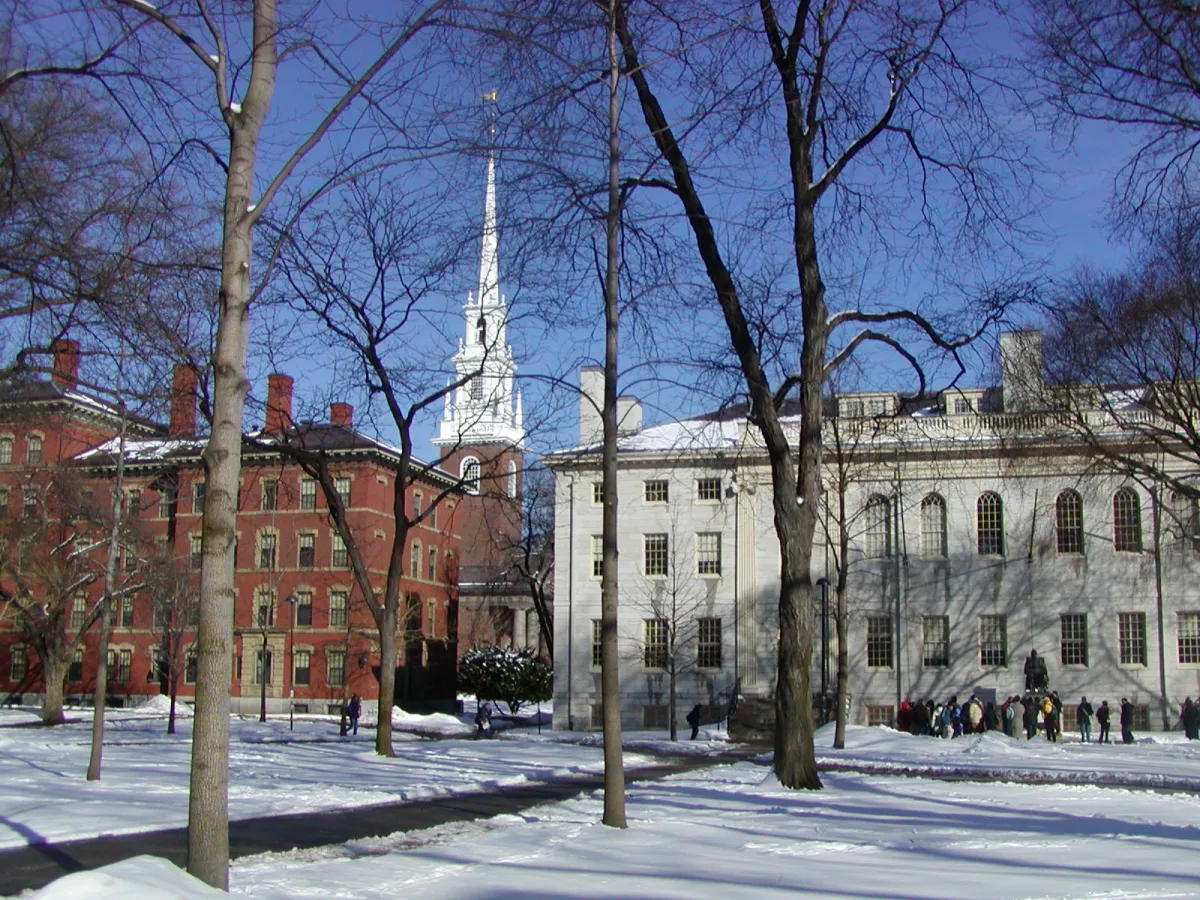 Photo: Harvard College, via 1.bp.blogspot.com
The ministers' solution was characteristically human: if Harvard wouldn't maintain proper theological discipline, they would create their own institution that would. Thus Yale College was born, not from a grand vision of educational advancement, but from what amounted to a religious tantrum thrown by men who believed their former colleagues had lost their doctrinal backbone.
 Photo: Yale College, via www.cambria.ac.uk
This pattern—institutional creation through ideological spite—would repeat itself across colonial America with remarkable consistency. Each new college emerged not because the founders had discovered some revolutionary educational philosophy, but because they couldn't stand the compromises being made at existing institutions.
The Multiplication of Academic Resentment
Princeton's founding in 1746 followed the same psychological script. Presbyterian ministers in the Middle Colonies grew frustrated with Harvard's and Yale's increasing tolerance for what they deemed theological laxity. Rather than attempt reform from within, they established the College of New Jersey (later Princeton) to ensure that future ministers would receive properly rigorous religious instruction.
Dartmouth's origin story in 1769 reveals the personal dimension of these institutional births. Eleazar Wheelock, a Congregational minister who had fallen out with the trustees of his Indian charity school, decided to relocate his entire operation to New Hampshire and transform it into a college. The move was less about educational innovation than about escaping the oversight of men who questioned his methods and authority.
Brown University emerged in 1764 when Rhode Island Baptists decided they needed their own institution after being excluded from the Congregationalist establishments that dominated New England higher education. The founding wasn't driven by pedagogical theory but by the basic human desire to control one's own institutional destiny rather than submit to the authority of theological rivals.
The Psychology of Institutional Founding
What these founding stories reveal is a fundamental truth about human nature that business leaders recognize instinctively: people rarely create new institutions to solve abstract problems. They create them to escape the frustration of working within existing systems that don't reflect their values or defer to their authority.
The Puritan ministers who founded Yale weren't educational visionaries; they were middle managers who had lost a power struggle and decided to start their own company. The psychological mechanism that drove them is identical to what motivates modern entrepreneurs who leave established firms to launch competitors—the belief that they can build something better by avoiding the compromises that existing institutions have accepted.
This pattern explains why America developed such a diverse higher education landscape compared to European countries, where a few ancient universities maintained monopolistic control over elite education. American religious fragmentation created a market for specialized institutions, each catering to a particular theological or regional constituency that felt underserved by existing options.
The Business Model of Academic Rivalry
The colonial college founders understood something that modern business strategists would recognize: differentiation through ideological purity can be more effective than competition through direct improvement. Rather than attempting to reform Harvard's curriculum, Yale's founders positioned their institution as the authentic alternative for families who wanted traditional Puritan education.
This strategy worked because it tapped into a fundamental human preference for institutional loyalty based on shared values rather than objective quality metrics. Parents who shared Yale's theological commitments sent their sons there not because they had conducted comparative studies of educational outcomes, but because Yale represented their tribe in the academic marketplace.
The financial sustainability of these institutions depended on maintaining clear ideological distinctions that justified their separate existence. Each college needed to convince potential donors and students that it offered something essential that couldn't be found elsewhere—a task that required constant emphasis on the theological or regional deficiencies of competing institutions.
Legacy of Educated Resentment
The irony of this history is that institutions founded to maintain rigid orthodoxy eventually became the most intellectually flexible universities in America. Harvard's supposed liberal drift in the 1690s would seem like fundamentalist extremism compared to its current theological diversity. Yale, Princeton, and the other colonial colleges all evolved far beyond their founders' narrow sectarian visions.
Yet the competitive dynamic established by their founding remains embedded in American higher education. The Ivy League's modern prestige partly reflects the success of institutions that began as theological protest movements. Students and parents still choose colleges based on institutional identity and perceived values as much as educational quality—a decision-making process that the colonial founders would recognize immediately.
The broader lesson extends well beyond higher education. Most of America's most enduring institutions—from political parties to business organizations—emerged from similar dynamics of ideological frustration and personal ambition. What we later celebrate as visionary founding moments usually began as very human reactions to immediate conflicts with existing authorities.
The ministers who created America's elite universities weren't trying to build a diverse educational ecosystem; they were trying to win arguments with their former colleagues. That their personal grievances accidentally produced institutional excellence says more about the power of competition than the wisdom of their original intentions.