The Invisible Hand Has a Long Memory: Three Centuries of American Business Decisions Driven by Personal Score-Settling
The Invisible Hand Has a Long Memory: Three Centuries of American Business Decisions Driven by Personal Score-Settling
Economic historians prefer clean causation. A firm enters a market because margins are favorable. A railroad extends its line because traffic projections justify the capital. A retail empire expands into a competitor's territory because the demographic data supports the move. These explanations are tidy, they fit neatly into academic frameworks, and they are frequently incomplete to the point of being misleading.
The actual record — the letters, the depositions, the diary entries, the telegrams sent at two in the morning — tells a different story with remarkable regularity. American business has been shaped, in ways that economists are structurally reluctant to account for, by the oldest and least rational of human motivations: the grudge.
Cornelius Vanderbilt and the Art of the Deliberate Ruin
The railroad consolidations of the nineteenth century are taught as exercises in industrial logic — vertical integration, network effects, the economics of scale. Cornelius Vanderbilt's career supports that reading on its surface. Below the surface, the record is considerably more personal.
Vanderbilt's dispute with Daniel Drew, his former associate and later adversary in the Erie Railroad wars of the 1860s, was not primarily a strategic disagreement. It was a vendetta conducted through financial instruments. Drew had outmaneuvered Vanderbilt in an earlier cattle-dealing dispute decades before their railroad conflict, and those who knew Vanderbilt well recorded that he did not forget it. His pursuit of Erie stock control — which ultimately cost him millions and failed — was described by his own associates as disproportionate to any rational calculus of return. He wanted to break Drew. The market was the instrument, not the point.
When Vanderbilt was finally outmaneuvered by Drew, Jay Gould, and James Fisk in what became known as the Erie War, his reported response was not a sober reassessment of strategy. It was fury. He spent years attempting to damage Gould's subsequent ventures in ways that offered him minimal direct benefit. The historical record here is not ambiguous: this was a man running a score.
The Department Store Wars and the Wound That Built an Empire
The retail rivalries of the late nineteenth and early twentieth centuries are similarly illuminating. The conventional account of how Rowland Macy built his department store empire in New York emphasizes his innovations in fixed pricing, advertising, and merchandise selection. These are real and significant. They are also downstream of something more personal.
Macy had failed in retail — repeatedly and humiliatingly — before his New York success. His stores in Massachusetts had collapsed. He had watched competitors in markets he understood take business he believed should have been his. The obsessive, granular attention to pricing and customer experience that defined his eventual success was not purely the product of entrepreneurial vision. It was, by his own account in correspondence, the product of a man who intended to prove something to specific people who had witnessed his earlier failures.
This pattern — the failed first act that produces a humiliation so specific it generates the discipline necessary for eventual dominance — runs through American commercial history with the consistency of a recurring entry in a ledger. Henry Ford's early automotive failures. Walt Disney's bankruptcy before Disneyland. The psychological literature on motivated cognition would predict exactly this: a sufficiently personal wound produces a focus that purely rational incentives rarely match.
Standard Oil and the Geography of Revenge
John D. Rockefeller's consolidation of the oil refining industry in the 1870s is the canonical story of monopolistic strategy. The South Improvement Company scheme, the secret railroad rebates, the systematic acquisition of competitors — all of it reads, in standard accounts, as cold-blooded industrial chess.
The correspondence tells you something additional. Rockefeller's particular intensity toward Cleveland competitors who had publicly doubted his early ventures, toward refiners who had organized against him rather than simply competing with him, toward the independent operators who had campaigned for regulatory action — his treatment of these specific parties was measurably harsher than his treatment of competitors who had simply competed. The rebate structures offered to those who had humiliated him were less favorable. The acquisition terms offered to those who had organized against him were more punishing. These distinctions are documented in the court records of the antitrust proceedings that followed.
Rockefeller himself, in his later memoirs, presented his actions as purely rational responses to market conditions. The market conditions were real. So was the list he was working through.
Why This Matters More Than Strategy
The argument here is not that strategy is irrelevant or that market forces are fictional. It is that human psychology — specifically, the psychology of status, pride, and remembered injury — operates as a constant force in commercial decision-making that standard economic models systematically underweight.
History is the longest psychology study ever conducted, and what it records, with extraordinary consistency across centuries and industries, is that the men and women who build and destroy economic empires are not the rational actors that economic theory requires them to be. They are people who remember. They remember who doubted them, who outmaneuvered them, who laughed at them in the wrong room at the wrong moment. And when they acquire the resources to act on those memories, a significant portion of them do.
The invisible hand, it turns out, has a very good memory for specific faces.
What the Old Ledger Records
For anyone studying American business history seriously — not as a collection of strategic case studies but as a record of human behavior under conditions of competition and stress — the grudge is not a footnote. It is a primary source.
The railroad that extended its line into a rival's territory at a loss, the retailer who opened a flagship store directly across the street from a competitor who had once fired him, the technology company that entered a market it had no structural advantage in because its founder had been publicly humiliated by the incumbent's CEO — these are not anomalies. They are the pattern.
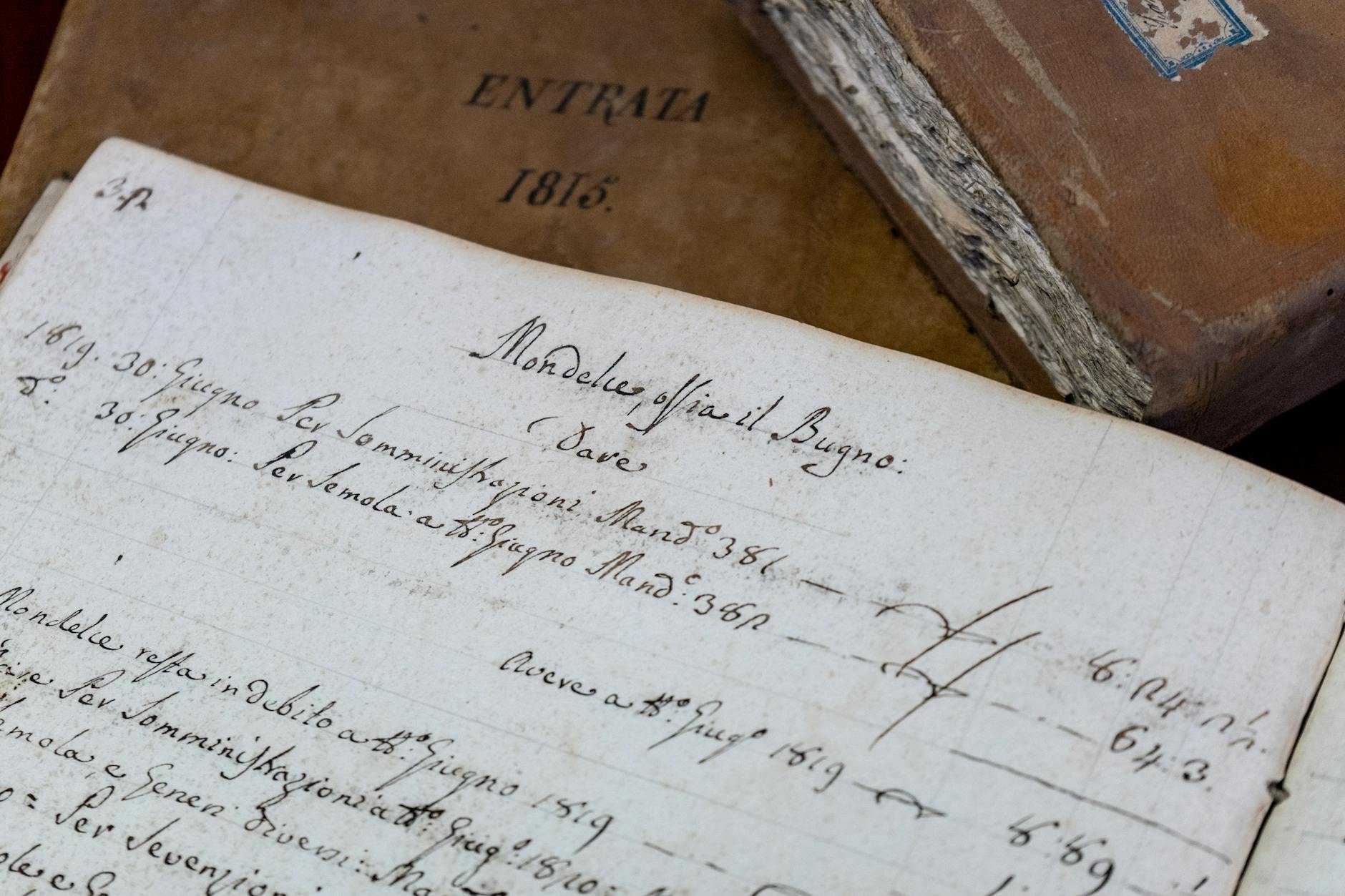
Understanding that pattern does not require cynicism about human nature. It requires only the willingness to read the actual record rather than the cleaned-up version. The ledger books are honest, even when the people who kept them were not.