Opened Under Subpoena: America's Peculiar Habit of Reading Its Own Records Only When Forced

Photo: NASA, ESA, CSA, Ori Fox (STScI), Melissa Shahbandeh (STScI), A. Pagan (STScI), CC BY 4.0, via Wikimedia Commons
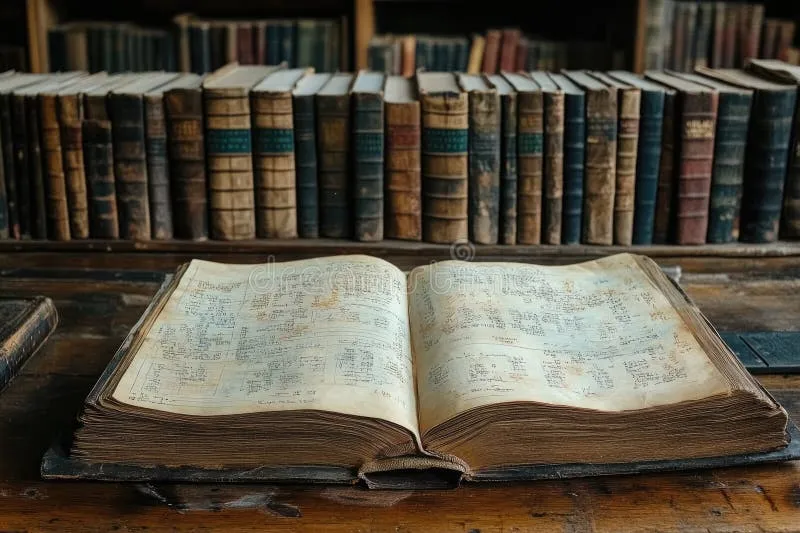
There is a particular American ritual, repeated so faithfully it might as well be liturgical. A scandal breaks. A committee convenes. Witnesses are sworn. For months, an army of lawyers and clerks assembles the most thorough account of an institution's conduct that institution has ever possessed—every memo, every warning ignored, every decision traced to its origin. The record runs to thousands of pages. It is released, reported on for a news cycle or two, and then re-shelved with a completeness that would impress any archivist, were anyone to visit.
Nobody visits.
The Shoebox Model of Memory
Most households contain a shoebox of receipts. It is not organized for understanding; it is organized for defense. Its owner does not consult it to learn anything. Its owner consults it when the auditor calls. The box exists so that a specific question, asked by a specific adversary, can be answered with a specific document. Between audits, it is not read. It is kept.
American institutional memory works the same way. The investigative records of the 1911 Triangle Shirtwaist fire produced an extraordinarily detailed account of factory conditions across New York State—testimony gathered with genuine rigor. The reforms followed, and then the record itself receded into the archive, consulted by historians and almost no one else, until the next fire. The Pecora hearings of 1933 assembled a forensic portrait of Wall Street's mechanics so complete that Pecora's own account of it became a bestseller—briefly. The 9/11 Commission's report was a genuine publishing event, purchased in enormous numbers, read by a fraction of its buyers, and treated thereafter as a closed file rather than an open question.
The pattern is consistent enough to be called a policy, though no one ever voted on it. We examine the past under compulsion and for the purpose of establishing blame. We do not examine it for understanding, because understanding is expensive and blame is binary.
What Selective Reading Protects
Consider what the shoebox model protects. A receipt exists to prove a transaction occurred; it has no interest in why. Likewise, the investigative record answers the narrow question—what happened, who knew—while declining the broader one: what in our arrangement of incentives made this outcome likely. The latter question cannot be answered by any document, because the answer is us, and we are not in the file.
This is not amnesia. Amnesia is passive. What we practice is closer to strategic retention: we keep everything, we read almost nothing, and the gap between the two is where the self-image lives. A nation that believed its history was a source of shame could not sustain this arrangement. Neither could a nation that believed it was a source of pride, honestly examined. The arrangement survives because it permits both beliefs at once—the archive confirms that nothing is hidden, while the unread shelves confirm that nothing must be faced.
The Case for Voluntary Audit
Any accountant will explain the difference between an audit demanded and an audit volunteered. The first establishes the minimum truth required to end the inquiry. The second can find things no one thought to ask about. Businesses that audit themselves voluntarily do so because they have concluded that discovering a problem early is cheaper than defending it late. The logic is not moral; it is arithmetic.
The same arithmetic applies to institutions and, arguably, to nations. Every compelled investigation of the last century—the fire, the crash, the war, the cover-up—was preceded by documents that, had anyone read them in ordinary time, would have made the inquiry unnecessary. The warnings were filed. The filing was the point. Filing feels like responsibility while requiring none of its costs.
The five-thousand-year record suggests this is not an American invention; it is a human default, visible in every bureaucracy from the Persian satrapies to the Soviet ministries. But the American version has a distinctive flavor, because it coexists with an unusually loud profession of forward-looking optimism. We do not read our history because we have persuaded ourselves we do not need to. The shoebox in the attic is not an oversight. It is an argument: that the past is settled, that the ledger is closed, and that anyone reopening it must have a lawsuit in hand.
History's verdict on this habit is patient and unkind. The records always survive. The question, each time, is whether anyone will read them before they are needed—or only after.