When Personal Hatred Becomes National Policy: The Jefferson-Hamilton Feud That Still Governs Your Bank Account
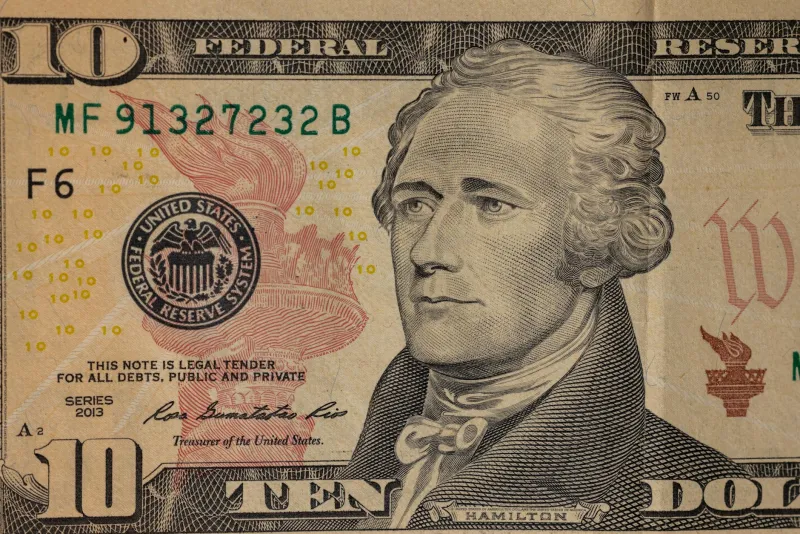
When Personal Hatred Becomes National Policy: The Jefferson-Hamilton Feud That Still Governs Your Bank Account
Every time Congress debates the Federal Reserve's authority, every argument over government bailouts, every political fight about Wall Street regulation—you're witnessing the continuation of a personal grudge match that began in George Washington's cabinet room in 1790. The combatants are long dead, but their psychological warfare became America's economic DNA.
Thomas Jefferson despised Alexander Hamilton with a intensity that bordered on pathological. Not just his policies—the man himself. Jefferson saw Hamilton as a monarchist, a corruption of republican virtue, a walking embodiment of everything the Revolution had fought against. Hamilton, for his part, viewed Jefferson as a dangerous idealist whose romantic notions about yeoman farmers would destroy the nation's commercial future.
What makes this relevant to your modern life isn't the historical curiosity of their mutual loathing. It's how completely their personal psychology became institutionalized into permanent American economic doctrine.
The Psychology of Permanent Opposition
Human beings don't just disagree about policy—they make policy disagreements personal, then make the personal disagreements permanent. Jefferson and Hamilton perfected this transformation. Their cabinet battles weren't academic debates about the proper role of government in commerce. They were psychological warfare between two men who couldn't stand to be in the same room.
Jefferson wrote privately that Hamilton was "a man whose history, from the moment at which history can stoop to notice him, is a tissue of machinations against the liberty of the country." Hamilton dismissed Jefferson as "a man of profound ambition & violent passions." These weren't policy critiques—they were character assassinations that became governing philosophies.
The remarkable thing about human psychology is how efficiently personal hatred scales into institutional conflict. Jefferson didn't just oppose Hamilton's national bank because he thought it was bad policy. He opposed it because Hamilton had proposed it, and Jefferson had convinced himself that everything Hamilton touched was corrupted by Hamilton's essential nature.
The Institutionalization of Personal Grudges
Hamilton died in 1804, but Jefferson lived until 1826—twenty-two years to embed his anti-Hamilton psychology into American institutions. And embed it he did, through the disciples he trained, the party apparatus he built, and the intellectual framework he established for opposing federal financial power.
The Jeffersonian tradition didn't just survive Hamilton's death—it thrived on it. Dead Hamilton became even more useful than living Hamilton, because dead Hamilton couldn't defend himself or evolve his positions. Jefferson's followers could fight the Hamilton in their heads forever, and they did.
Every major American financial crisis since 1807 has replayed some version of the Jefferson-Hamilton dynamic. The panic of 1837, the fights over the Second Bank of the United States, the creation of the Federal Reserve in 1913, the New Deal banking reforms, the 2008 financial crisis—all of them featured Jeffersonian voices warning about concentrated financial power and Hamiltonian voices arguing for federal intervention to stabilize markets.
The Modern Inheritance of Ancient Grudges
When contemporary politicians argue about whether the Federal Reserve should exist, they're not making original arguments. They're reciting lines from a script written by men who hated each other personally and couldn't separate their policy preferences from their psychological needs.
The "audit the Fed" movement draws directly from Jeffersonian suspicion that centralized financial power inevitably becomes corrupted. The "too big to fail" doctrine reflects Hamiltonian conviction that government must preserve financial stability even at the cost of moral hazard. Neither side acknowledges that their core assumptions originated in personal animosity between two cabinet secretaries who couldn't stand each other.
This isn't an argument for one side or the other. It's an observation about how thoroughly personal psychology becomes institutional memory. Jefferson and Hamilton weren't debating abstract principles—they were working out their mutual hatred through policy positions. But those policy positions outlived the hatred and became permanent features of American political discourse.
The Persistence of Founding Feuds
The most telling evidence of how personal the Jefferson-Hamilton conflict remained comes from Jefferson's own correspondence late in life. Decades after Hamilton's death, Jefferson was still writing letters explaining why Hamilton had been wrong about everything. The old man couldn't let it go because the disagreement had never been intellectual—it had been psychological.
Modern Americans inherit the policy framework of that psychological conflict without understanding its personal origins. We debate federal banking authority as if it were a matter of constitutional interpretation or economic theory. But the real foundation of the debate is two dead men who couldn't stand each other and turned their mutual disgust into competing visions of American capitalism.
The lesson isn't that Jefferson was wrong or Hamilton was right, or vice versa. The lesson is that personal psychology has a half-life longer than plutonium. The grudges of the founding generation are still governing your bank account, your mortgage rates, and your retirement fund. Human nature hasn't changed since 1790, and neither has the tendency to mistake personal animosity for principled disagreement.
Every time you hear a politician invoke the "founding fathers" to support some position on economic policy, remember that you're listening to the institutionalized echo of men who hated each other personally and couldn't separate their feelings from their policies. The founders built their grudges into the system, and we're still living with the consequences.