The Sermon That Sells
When the Panic of 1837 devastated American commerce, religious leaders across denominations reached the same conclusion: God was punishing the nation for its material excesses. Presbyterian ministers declared the crisis divine judgment on speculation. Methodist preachers condemned the "worship of Mammon" that had supposedly triggered celestial wrath. Baptist congregations heard that economic suffering was spiritual correction for collective greed.
This interpretation proved remarkably profitable. Church attendance surged as frightened citizens sought divine protection from financial ruin. Religious publications experienced unprecedented circulation growth as readers hungered for explanations that transformed random catastrophe into moral narrative. The psychological need to assign meaning to suffering created a market that religious entrepreneurs were eager to supply.
The pattern established in 1837 would repeat with mechanical precision through every subsequent American financial crisis. Economic collapse consistently triggered religious revival, and religious revival consistently produced institutional wealth for those positioned to capitalize on crisis-driven spirituality.
The Psychology of Profitable Prophecy
Human beings cannot psychologically tolerate the possibility that catastrophic events occur without moral significance. When markets collapse for complex systemic reasons—overleveraging, regulatory failures, technological disruptions—the explanations satisfy intellectual curiosity but provide no emotional comfort. Religious interpretation offers something that economic analysis cannot: the promise that suffering serves a purpose and that moral behavior can prevent future catastrophe.
American religious leaders understood this psychological vulnerability long before behavioral scientists could measure it. They consistently framed financial crises not as technical failures requiring policy solutions, but as spiritual failures requiring personal transformation. This reframing served multiple institutional interests simultaneously.
First, it positioned religious authorities as essential interpreters of economic events, expanding their cultural influence beyond traditional spiritual matters. Second, it created recurring revenue streams through increased donations, publication sales, and membership growth. Third, it deflected attention from systemic problems that might require challenging powerful interests within religious institutions' donor base.
The Great Depression as Theological Opportunity
The 1929 stock market crash and subsequent depression provided American religious leaders with their greatest interpretive opportunity. The scale of economic devastation demanded explanations proportional to its impact, and theological frameworks proved more emotionally satisfying than technical analyses of monetary policy or international trade imbalances.
Prominent evangelists like Charles Fuller used radio broadcasts to reach millions of listeners seeking spiritual explanations for material suffering. Fuller's "Old Fashioned Revival Hour" became one of America's most popular programs by consistently linking economic hardship to divine displeasure with modern moral standards. His audience donations funded a media empire that outlasted the depression itself.
 Photo: Charles Fuller, via www.hollywoodreporter.com
Catholic leaders adopted similar strategies, with figures like Father Charles Coughlin building massive followings through radio sermons that blamed the depression on various combinations of international bankers, communist infiltrators, and moral decay. Coughlin's audience of 30 million listeners generated sufficient financial support to fund his own newspaper, political organization, and broadcasting network.
The psychological appeal of these interpretations lay not in their accuracy but in their utility. Listeners who felt powerless against incomprehensible economic forces could regain agency through personal moral reform. The promise that individual righteousness could influence national prosperity provided comfort that technical economic education could not match.
Modern Manifestations of Ancient Patterns
Contemporary American religious leaders continue exploiting the same psychological vulnerabilities that their predecessors identified in 1837. The 2008 financial crisis produced familiar theological explanations: divine punishment for national moral failures, spiritual correction for materialistic excess, and prophetic warnings about the consequences of abandoning traditional values.
Megachurch pastors like John Hagee and Pat Robertson built media empires partly by consistently interpreting economic events through apocalyptic frameworks that position their audiences as faithful remnants awaiting divine vindication. These interpretations generate continuous revenue through book sales, conference attendance, and recurring donations from audiences seeking spiritual insurance against financial uncertainty.
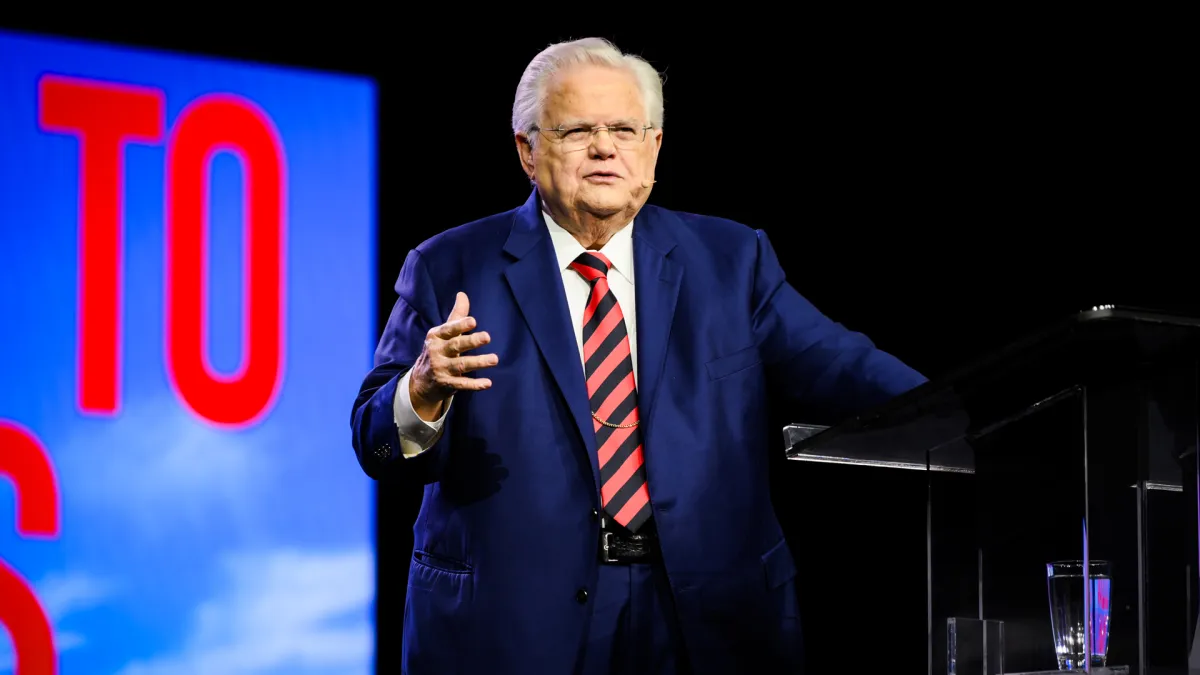 Photo: John Hagee, via jhm-cms.images.sardius.media
The prosperity gospel movement represents the logical evolution of crisis theology, promising that proper religious belief can actually generate material wealth. This framework transforms the traditional relationship between spirituality and economics from defensive (avoiding divine punishment) to offensive (securing divine blessing). The psychological appeal remains identical: personal agency over incomprehensible market forces.
The Policy Consequences of Theological Economics
Religious interpretation of financial crises consistently produces counterproductive policy responses because it misdiagnoses systemic problems as individual moral failures. When religious leaders convince their audiences that economic collapse results from collective sin, the logical solution becomes individual repentance rather than institutional reform.
This misdirection has repeatedly delayed necessary regulatory changes, infrastructure investments, and social safety net expansions that might actually prevent or mitigate future crises. Politicians responding to religiously motivated constituencies focus on symbolic moral legislation rather than technical economic policy. The psychological satisfaction of addressing supposed spiritual causes crowds out attention to demonstrable material causes.
The pattern persists because it serves multiple institutional interests. Religious organizations benefit from increased relevance and revenue. Political leaders benefit from deflecting responsibility for policy failures onto divine will. Financial institutions benefit from avoiding regulatory scrutiny while public attention focuses on moral rather than structural explanations for their failures.
The Eternal Market for Meaning
American religious leaders will continue profiting from financial crises because the psychological needs that drive crisis theology are permanent features of human psychology. People will always prefer explanations that provide moral agency over those that reveal their powerlessness. Institutions will always benefit from interpreting systemic failures as individual shortcomings.
The theological interpretation of economic events represents one of America's most durable business models: monetizing the human inability to accept that catastrophic events can occur without moral significance. This market has operated continuously for nearly two centuries and shows no signs of saturation.
Every future financial crisis will produce familiar religious responses because the underlying psychology has not changed since 1837. The only variables are the specific technological platforms through which crisis theology reaches its audience and the particular moral failings that religious entrepreneurs identify as causative factors. The profitable pattern itself has achieved the permanence that its practitioners claim to seek from divine providence.