The Dead Roman's Living Legacy
In the early 19th century, American land speculators, federal planners, and railroad executives shared an unshakeable belief: latitude determined a region's economic potential. This wasn't folk wisdom or frontier superstition—it was settled science, inherited from classical antiquity and reinforced by centuries of European scholarship. The theory held that temperate zones produced industrious populations and agricultural abundance, while extreme latitudes bred either indolence or barbarism.
This ancient framework, traced back to Roman geographer Strabo and refined by Enlightenment thinkers, would guide the most consequential economic decisions in American history. The placement of railroads, the allocation of federal investment, and the targeting of immigration campaigns all flowed from a theoretical understanding of climate and human potential that was both sophisticated and catastrophically wrong.
The Bureaucratic Application of Ancient Wisdom
When Congress debated internal improvements in the 1820s and 1830s, lawmakers didn't simply argue about political favoritism or regional equity. They invoked climatic theory as objective justification for their preferences. The "isothermal theory" suggested that regions sharing latitude with prosperous European areas would naturally replicate that prosperity in America.
This scientific veneer provided perfect cover for what might otherwise have appeared as naked political calculation. Federal resources flowed toward territories that aligned with theoretical predictions rather than empirical evidence. The Michigan Territory received railroad subsidies partly because its latitude corresponded to productive regions of northern Europe. Southern Illinois was deemed climatically inferior to northern Illinois, shaping infrastructure decisions that would echo for generations.
When Theory Meets Topography
The collision between climatic theory and American geography produced some of history's most expensive intellectual errors. Planners assumed that the treeless prairies of Illinois and Iowa indicated poor soil, since European experience suggested that fertile land naturally supported forests. Conversely, they viewed the heavily forested regions of Wisconsin and Minnesota as inherently more promising.
This theoretical framework guided railroad construction through the 1850s and 1860s. The Illinois Central Railroad initially planned routes that avoided the prairie "wastelands" in favor of forested areas that theory suggested would be more productive. Only economic necessity—the prohibitive cost of clearing forests—forced railroads through the prairies, where they discovered soil of extraordinary fertility.
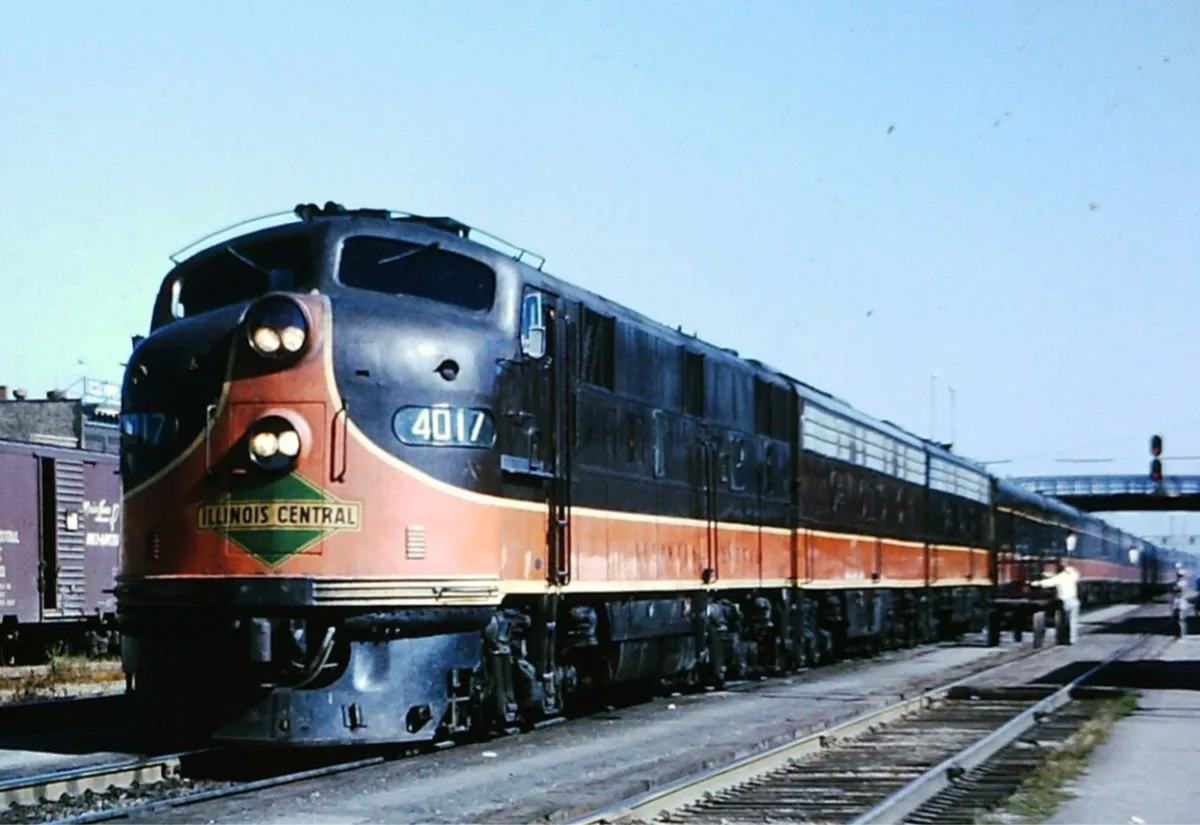 Photo: Illinois Central Railroad, via primary.jwwb.nl
The Psychology of Intellectual Investment
Once substantial capital had been committed based on climatic theory, abandoning that framework became psychologically and economically impossible. Railroad executives, land speculators, and federal bureaucrats had staked their reputations and fortunes on the assumption that latitude predicted prosperity. Contradictory evidence was rationalized away rather than integrated into new models.
This intellectual stubbornness created a feedback loop that reinforced initial mistakes. Regions that received early investment based on theoretical predictions attracted additional investment, regardless of their actual economic potential. Meanwhile, areas dismissed by climatic theory struggled to attract capital even when their advantages became empirically obvious.
The Great Miscalculation
By the 1870s, the fundamental error in American development planning had become undeniable. The prairie regions that theory had dismissed as climatically inferior were producing agricultural surpluses that dwarfed the output of supposedly superior latitudes. The "Great American Desert" was feeding the nation. Meanwhile, some regions that had received preferential treatment based on their theoretical advantages struggled to justify the investment.
Yet the infrastructure was already built, the capital was already allocated, and the settlement patterns were already established. Chicago's rise as the continental railroad hub reflected not its climatic advantages—which were largely imaginary—but its accidental position at the intersection of routes planned according to outdated theory.
The Persistence of Error
Even after climatic theory was discredited, its effects persisted through the infrastructure it had shaped. Railroads built to serve theoretically promising regions continued to provide those regions with competitive advantages long after the theory was abandoned. Cities that had been favored by climatic planning retained their transportation networks and accumulated capital.
This created a peculiar historical irony: regions that prospered because of bad science continued to prosper because prosperity, once established, becomes self-reinforcing. The theoretical framework that guided American development was wrong, but wrong in ways that took decades to prove—and by then, the winners and losers were locked in.
The Modern Midwest's Ancient Roots
Today's economic geography of the American Midwest bears the invisible fingerprints of Roman climate theory. The concentration of heavy industry around the Great Lakes, the agricultural dominance of the prairie states, and the transportation networks that connect them all reflect decisions made by men who believed that latitude determined destiny.
Chicago's position as the continental transportation hub wasn't inevitable—it was the product of specific theoretical assumptions about climate and economic potential. Had American planners understood prairie soil quality from the beginning, the nation's railroad network might have developed very differently, with profound consequences for regional development patterns.
The Bureaucratic Confidence Problem
The climatic theory disaster illustrates a persistent feature of large-scale planning: the tendency to apply incomplete knowledge with complete confidence. Federal bureaucrats and private investors in the 1800s possessed extensive theoretical frameworks inherited from classical antiquity and Enlightenment scholarship. What they lacked was empirical knowledge of American conditions.
This gap between theoretical sophistication and practical ignorance created the perfect conditions for systematic error. Planners made confident decisions based on elegant theories that were fundamentally unsuited to American realities. The psychological appeal of comprehensive theoretical frameworks overcame the prudent skepticism that might have prevented catastrophic miscalculation.
The Ledger of Unintended Geography
The American Midwest as we know it today—its cities, transportation networks, and economic specializations—emerged not from rational planning or market forces alone, but from the systematic application of ancient Roman theories about climate and human potential. Federal policy and private investment decisions based on latitude-destiny assumptions created a regional economic structure that persisted long after the theories were discredited.
In the great ledger of intellectual history, few theoretical errors have proven more consequential than the climatic determinism that shaped American westward expansion. A dead Roman's musings about geography and human nature, filtered through centuries of European scholarship and applied with 19th-century bureaucratic confidence, predetermined which American communities would thrive and which would struggle—often in ways that contradicted the theory's own predictions.
The Midwest's economic geography remains a monument to the power of bad ideas, confidently applied, to shape physical reality in ways that outlast the ideas themselves.